

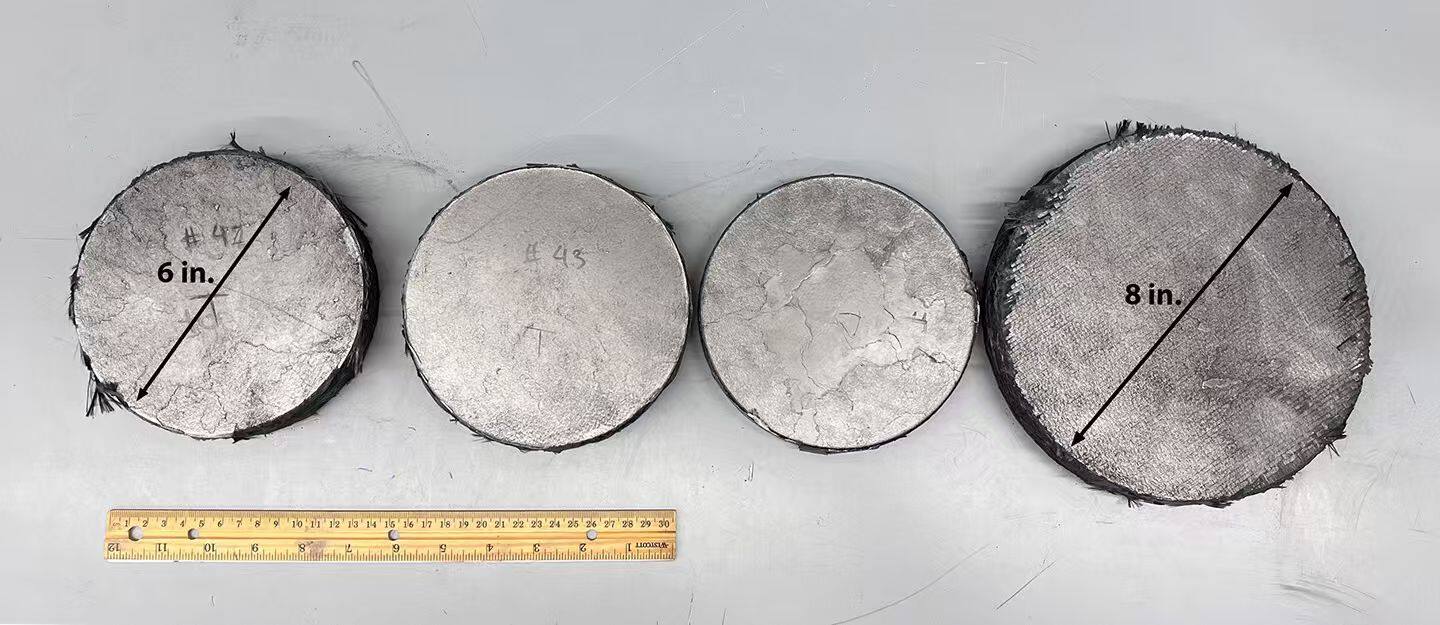
On 2026/9/3, Johns Hopkins Applied Physics Laboratory (APL) unveiled FAST CAR² technology: using Field-Assisted Sintering Technique for Carbon-Carbon to replace traditional multi-stage chemical vapor infiltration or resin impregnation–pyrolysis with a single-step densification process, compressing the partial manufacturing cycle of carbon/carbon composites from "months" to "days." APL also confirmed that FAST CAR² samples have passed high-velocity oxy-fuel (HVOF) thermal shock testing and scaled from 1-inch to 6-inch and 8-inch dimensions.
The real takeaway from this news isn't just "faster"—it's whether accelerating material preparation by an order of magnitude allows high-temperature, oxidation, thermal shock, ablation, and cycle reliability testing to shift from slow validation to a new rhythm of rapid screening plus deep verification.
I. Why have carbon/carbon composites long been constrained by "manufacturing lead time"?
Carbon/carbon (C/C) composites consist of carbon fiber reinforcements and a carbon matrix. They feature low density, high specific strength, low coefficient of thermal expansion, high thermal conductivity, and excellent thermal shock resistance. Due to their ability to maintain structural stability at extremely high temperatures in inert or low-oxygen environments, they are widely used in rocket nozzles, reentry/hypersonic thermal protection components, brake discs, and high-temperature thermal structures.
The challenge in traditional C/C manufacturing lies not just in shaping, but in densification. Carbon fiber preforms contain numerous pores that require continuous filling with a carbon matrix via methods such as chemical vapor infiltration/deposition (CVI/CVD) or resin/pitch impregnation followed by pyrolysis. A single cycle typically fills only some pores, necessitating repeated impregnation, pyrolysis, densification, and heat treatment until porosity reaches an acceptable level. Long cycle times, high energy consumption, and difficulties in maintaining batch consistency are key factors driving the persistently high costs of C/C composites.
A clear comparison from publicly available APL data shows that the commercial C/C samples used for reference underwent approximately 36 weeks of traditional manufacturing, whereas the FAST CAR² samples were formed in just a few days via a single-step field-assisted sintering process. According to APL, pores in the FAST CAR² samples are primarily reduced to the micrometer scale, while conventional industrial samples may contain pores approaching the millimeter scale.
2. Manufacturing from "monthly" to "daily": It's more than just faster delivery.
The core of FAST CAR² is not simply heating the furnace faster, but transforming the traditional densification mechanism. As explained by APL, this process introduces carbon-containing materials into the carbon fiber skeleton and then applies rapid high-current pressure densification via field-assisted sintering (FAST). This converts what was once a multi-cycle matrix filling process into a single-step rapid densification.
From a R&D process perspective, this shift implies accelerated iteration cycles for material formulations, fiber architectures, matrix precursors, and process parameters. While a single material preparation cycle previously took weeks or even months, teams can now produce multiple sample sets in significantly less time. This directly increases the throughput pressure on downstream characterization and high-temperature validation stages.
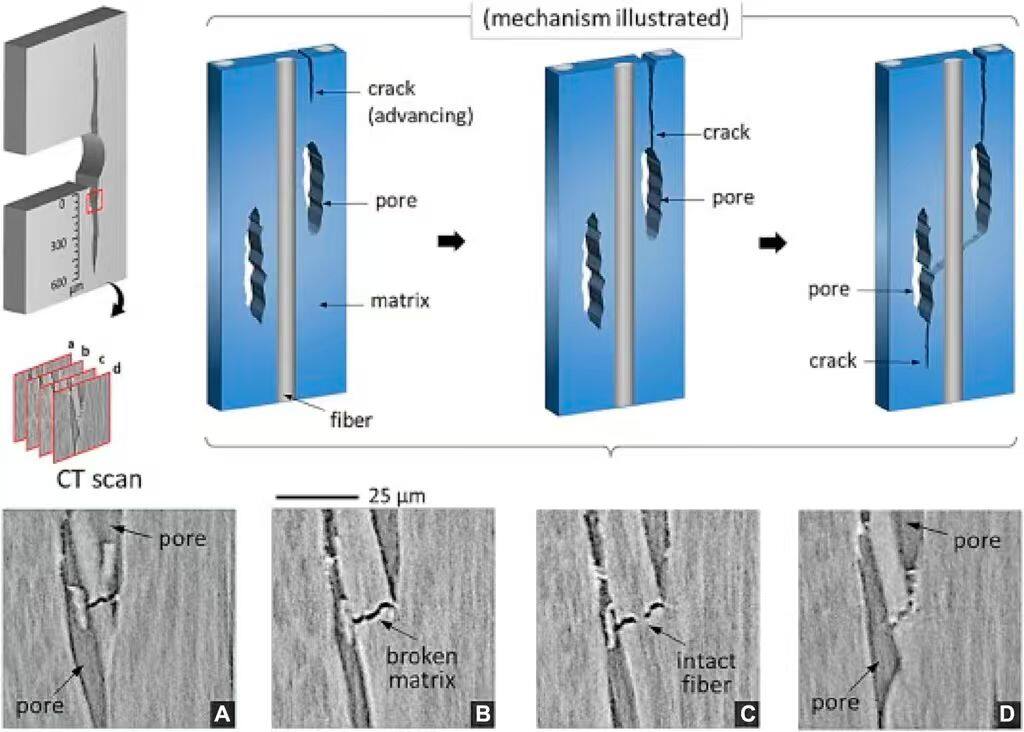
More critically, the new rapid process can yield pore size, connectivity, interfacial bonding, and residual stress profiles distinct from traditional CVI or resin impregnation routes. Even with similar bulk density, failure mechanisms under rapid heating, oxidizing atmospheres, thermal shock, and high heat flux may differ. Therefore, as manufacturing speed increases, it is essential to accelerate the establishment of correlations between microstructure, thermophysical properties, and performance in extreme environments.
3. Why Oxidation and Ablation Testing Remain Critical for C/C "High-Temperature Resistance"
The statement "C/C withstands 2800°C" can be misleading without specifying the environment. C/C composites maintain excellent high-temperature performance in low-oxygen environments such as inert gas or vacuum, but in oxygen-containing atmospheres, carbon reacts to form CO/CO₂. Public reviews indicate that unprotected C/C begins to oxidize significantly above approximately 450°C. Oxidation and ablation become increasingly critical concerns as temperature, oxygen partial pressure, and gas flow velocity increase.
This is why, for hypersonic, re-entry, and rocket nozzle applications, engineering solutions often require SiC, ZrC, HfC, and other ultra-high-temperature ceramics (UHTCs), or modified/multi-layer oxidation-resistant/ablation-resistant coatings. A 2025 review highlighted that high-temperature protection for carbon-based composites must address oxygen diffusion, coating cracking, thermal expansion mismatch, glass phase volatilization, and mechanical erosion from high-speed airflow.
Therefore, for rapid fabrication processes like FAST CAR², "high-temperature validation" must address three distinct issues: (1) thermal structural stability under oxygen-free or low-oxygen conditions; (2) oxidation rates in the presence of oxygen; and (3) mass ablation rate, linear ablation rate, and surface recession patterns under combined high heat flux and high-speed airflow. A single conventional high-temperature furnace test cannot substitute for all three.
4. After accelerating preparation, validation must be accelerated in at least four areas.
4.1 Microstructure screening: First, answer "Is it the same material state?"
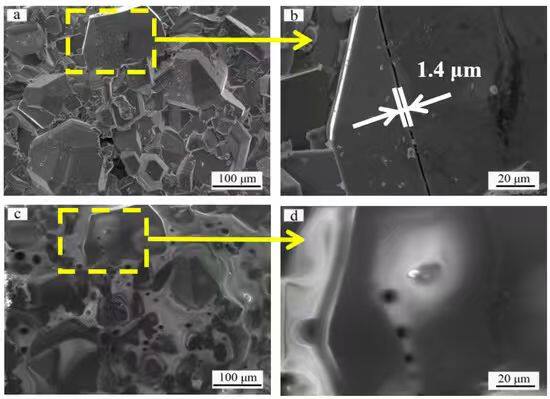
The first challenge for rapid processes is ensuring consistency. For each batch of FAST CAR² samples, priority must be given to establishing a foundational database covering density, open porosity, pore size distribution, internal CT defects, fiber/matrix interfaces, degree of graphitization, and thermal properties. Only when the microstructure of samples produced by the rapid process is stable and reproducible can subsequent high-temperature data be meaningfully compared.
APL has already used CT to compare traditional 36-week samples with FAST CAR² samples, highlighting that the new process creates finer, more uniformly distributed pores. For engineering R&D, this CT screening can serve as a "fast release" step: first, non-destructively filter out large voids, delamination, and anomalies before proceeding to higher-cost high-temperature testing.
4.2 Rapid Thermal Shock: Verifying whether "faster heating could cause material failure due to thermal stress"
C/C composites exhibit excellent thermal shock resistance due to their low coefficient of thermal expansion and high thermal conductivity. However, this does not imply that all fiber architectures, porosity levels, or coating systems deliver equivalent thermal shock lifetimes. Particularly when new processing techniques alter the porosity and interfacial states, local stress concentrations under rapid heating/cooling conditions require re-verification.
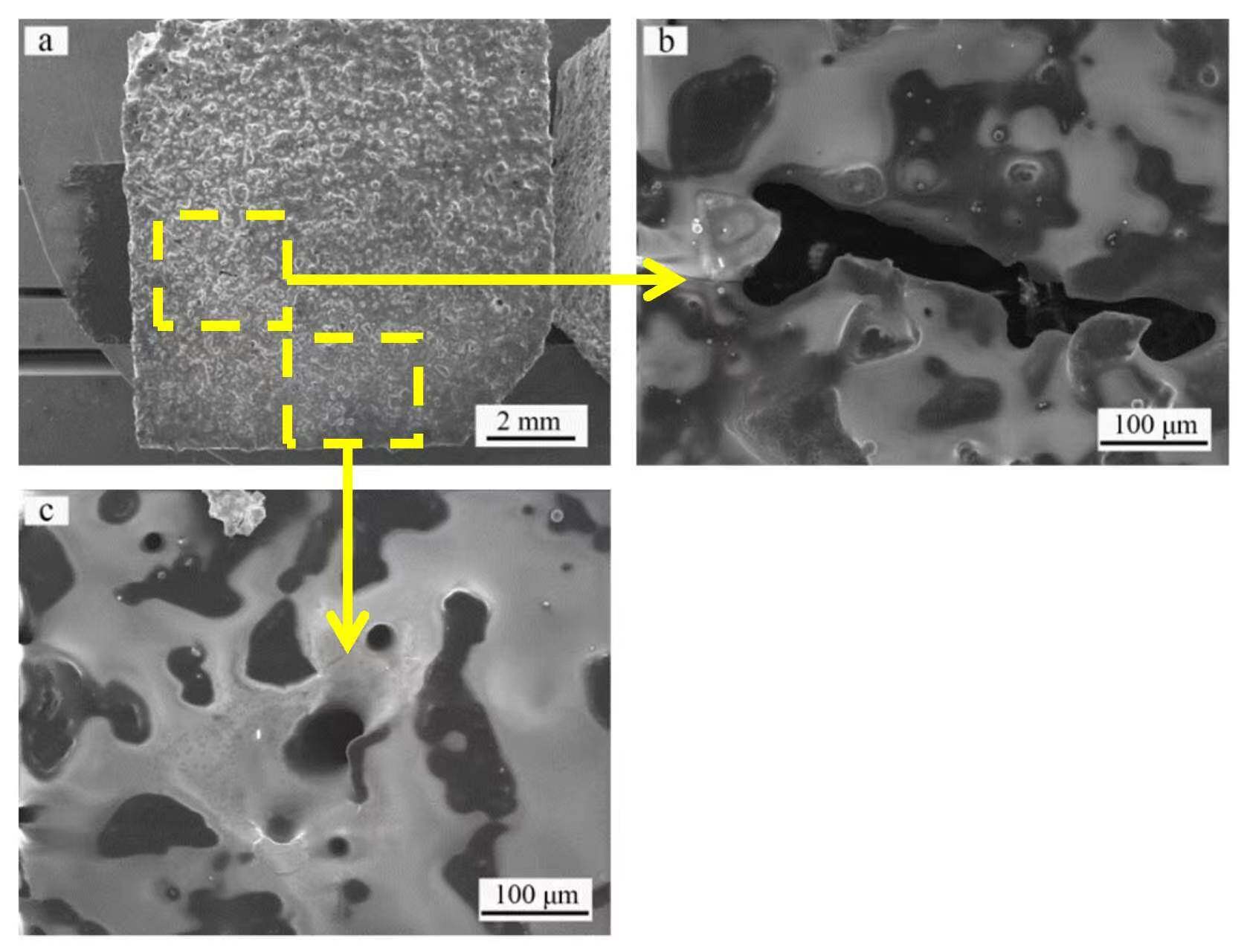
Existing studies show that under oxidizing thermal shock, C/C composites exhibit significant changes in matrix oxidation morphology and mechanical properties as temperature increases. Oxidation and thermal stress occur coupled, not independently. Therefore, high heating rates, defined peak temperatures, hold times, and cooling methods should be key parameters for rapid material screening.
4.3 Recurring validation: Passing once doesn't mean you'll pass every time.
For reusable vehicles or thermal components with frequent start-stop cycles, single extreme temperature exposure is not the only concern. Repeated thermal cycling accumulates interfacial damage, pore growth, coating cracking, and oxidation erosion. For rapid manufacturing routes, it is critical to ensure consistent quality loss, dimensional stability, thermal conductivity degradation, and residual strength across batches after cycling.
With manufacturing cycles compressed from months to days, a more effective R&D rhythm is: rapid screening via short-cycle thermal shock, ranking candidate formulations with longer-cycle thermal cycling, and advancing select high-priority samples to high heat flux/ablation validation. Only this approach ensures testing cadence keeps pace with material iteration speed.
4.4 High Heat Flux/Ablation: Ultimately, the question is "Can it still operate under real thermal conditions?"
For nozzles and hypersonic thermal protection systems, high-temperature furnaces alone cannot fully replicate service environments. In actual operation, surfaces simultaneously endure high heat flux, steep temperature gradients, oxidizing flows, and mechanical erosion. APL public information notes that FAST CAR² samples have passed HVOF testing—exposing them to extreme thermal loads via supersonic hot gas streams. This step more closely replicates aerothermal conditions than furnace heating alone.
However, during actual engineering validation, further quantification is required for surface temperature, heat flux, linear ablation rate, mass ablation rate, back-temperature response, crack/delamination, and post-test residual strength. A 2025 review on the oxidation and ablation resistance of carbon-ceramic composites also emphasizes that reliability in high-temperature applications stems from the combined effects of thermochemical reactions, protective film evolution, and erosion by high-speed airflow.
5. "Rapid Manufacturing" requires a corresponding "Quick Validation + Deep Validation" roadmap.
| Verify Level | Common techniques | Main Output | R&D function |
|---|---|---|---|
| Rapid Structural Screening | Density/Porosity, CT, Microstructure, Thermal Properties | Pores, defects, batch consistency | Hour-to-day level anomaly sample elimination |
| Rapid Thermal Shock Screening | Laser/radiation rapid heating + controlled cooling | Cracks, quality degradation, residual strength | Compare different formulations/process windows |
| mid-cycle thermal cycling | Programmed temperature cycling | Cycle life, performance degradation | Evaluate reuse potential |
| High Heat Flux/Ablation Validation | Plasma/Flame/HVOF/High-Heat-Flux Radiation | Heat flux response, ablation rate, backside temperature | Simulate typical extreme environments |
| Failure Analysis | SEM/EDS, XRD, CT, Cross-Section Analysis | Oxidation, cracking, and delamination mechanisms | Reverse-optimized materials and processes |
The key to this approach is layered validation: instead of sending every new process sample directly to expensive, time-consuming full-scale extreme environment testing, we first use rapid structural and thermal shock screening to boost R&D throughput. Only the most promising candidates then proceed to long-term cycling and high heat flux verification. As manufacturing cycles shorten, the testing strategy should shift from "one-time validation at project end" to "continuous validation throughout material iteration."
VI. Industry Insights: True Breakthroughs Come from Shortening the Overall "Material Iteration Cycle"
The most compelling aspect of FAST CAR² isn't just accelerating a single material—it could redefine the iteration rhythm for C/C composite development. Historically, producing a batch of C/C samples required a lengthy densification cycle, forcing R&D teams to validate only a limited set of formulations and process windows. If manufacturing cycles can be reliably compressed to days, we gain the opportunity to densely explore fiber architectures, matrix systems, pore control strategies, and protective coatings.
However, this also reveals a new bottleneck: if high-temperature validation still takes weeks or months, the R&D cycle isn't truly shortened—only the bottleneck shifts from manufacturing to testing. Therefore, future extreme-environment materials development will likely emphasize high-throughput material synthesis, rapid thermal property screening, short-cycle thermal shock, automated thermal cycling, and deep, high-heat-flux validation of final candidate materials.
Reference Materials
- [1] Johns Hopkins University Applied Physics Laboratory. Johns Hopkins APL Breakthrough Accelerates Development of Heat-Resistant Materials. 2026-09-03.
- [2] Advancements in Design and Manufacturing of High-Performance Modified Carbon/Carbon Composites for Extreme Aerospace Environments: A Comprehensive Review. Journal of Composites Science, 2026, 14(5): 55.
- [3] Advances in oxidation and ablation resistance of carbon-ceramic composites: A review. International Journal of Lightweight Materials and Manufacture, 2025, 8(1): 87-126.
- [4] Advances in ultra-high-temperature ceramic coatings with enhanced oxidation resistance for carbon-based composites. Extreme Materials, 2025, 1(3): 9-43.
- [5] Experimental study on thermal shock effects in carbon–carbon composites. Composite Structures, 2015.
- [6] Crack Evolution and Oxidation Failure Mechanism of a SiC Ceramic Coating Reactively Sintered on Carbon/Carbon Composites. Materials, 2021, 14(24): 7780.
- [7] Research progress on carbon-based materials for aerospace applications. Composites Part B: Engineering, 2026, 309: 113105.
- [8] High-temperature experiments and simulation methods for studying the oxidation behavior of thermostructural materials. Composites Part A: Applied Science and Manufacturing, 2025, 198: 109150.