

In 2026, two new reviews on plasma-facing materials (PFMs) for fusion brought a longstanding challenge back into focus: future fusion reactor materials must withstand heat fluxes up to approximately 20 MW/m², while simultaneously enduring high-energy particle bombardment, 14.1 MeV fusion neutron irradiation, cyclic thermal loading, and progressive degradation of material properties over their service life. [1][2]
Notably, a recent review on tungsten thermal conductivity indicates that under irradiation, experimental reductions in thermal conductivity can reach up to 55%. Since reduced thermal conductivity exacerbates temperature gradients and thermal stress [2], this implies: fusion material validation must go beyond asking "Can new tungsten withstand 20 MW/m²?" and instead ask, "How long can tungsten sustain service under real cooling boundaries and cyclic conditions after irradiation?"
1. Why is "20 MW/m²" a critical figure in fusion material validation?
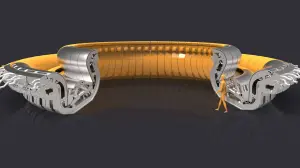
The divertor in a tokamak plays a critical role in removing plasma heat, helium ash, and impurities, making it one of the most thermally loaded regions inside the vacuum vessel. According to ITER's official design specifications, the vertical target plate must withstand a steady-state heat flux of approximately 10 MW/m², with slow transients reaching up to 20 MW/m². The target plates use tungsten as the plasma-facing armor and are continuously cooled internally via water circulation. [3]
A 202026 review published in *Extreme Materials* further highlights that future PFM environments will not only involve heat fluxes up to approximately 20 MW/m² but also exposure to 14.1 MeV fusion neutrons and high-temperature plasma particles. No single material can simultaneously meet ideal performance across all critical metrics, including melting point, thermal conductivity, thermal shock resistance, sputtering yield, corrosion resistance, irradiation stability, and hydrogen isotope retention. [1]
Domestic studies have reached similar order-of-magnitude estimates. A 202025 review in *Acta Metallurgica Sinica* summarizes steady-state heat flux on the divertor at 5–20 MW/m², noting that transient events like ELMs can drive power densities up to the GW/m² level, shifting damage modes from thermal fatigue to surface plastic deformation, cracking, recrystallization, and even localized melting. [4]
2. Why is tungsten the mainstream material, yet new tungsten's performance doesn't reflect that of tungsten after service?
Tungsten offers key advantages for plasma-facing applications, including a high melting point, high thermal conductivity, low physical sputtering yield, and low tritium retention. These properties make it one of the top candidates for high-Z plasma-facing components in ITER and future fusion reactors. However, tungsten also presents challenges such as room-temperature brittleness, reduced strength and toughness after recrystallization, and cracking under cyclic thermal loading. [1][4]
Less commonly noted: the frequently cited thermal conductivity of "approximately 170 W/(m·K)" in engineering design corresponds to unirradiated tungsten at room temperature. In future fusion reactors, however, tungsten will undergo continuous displacement damage and transmutation. A 2019 review in *Nuclear Materials and Energy* compiling experimental data found that irradiation can reduce tungsten's thermal conductivity by up to 55%. Multiple studies also observed significant defect annealing effects in the 800–900 K range. [2]
Thermal-mechanical analysis of the same review shows that reduced thermal conductivity increases the temperature gradient within tungsten armor. Under coolant conditions of 420 K, calculated thermal stress can rise by approximately 50%, with stress concentrating at interfaces near cooling channels. For irradiation damage levels exceeding 10 dpa, thermal conductivity degradation may even constrain the selection of tungsten armor thickness and cooling parameters. [2]
3. High heat flux validation: The goal is not to verify a single number, but an entire set of boundary conditions.
3.1 First, convert incident power into traceable absorbed heat flux.
When performing high heat flux tests at the material level using electron beams, ion/neutral beams, lasers, or other radiation sources, the first challenge is calibrating the heat flux. For laser loading, the actual absorbed heat flux depends on laser power, spot area, surface absorptivity, wavelength, roughness, and temperature state. It cannot be simply approximated as "laser power ÷ spot area."
Therefore, during material screening, programmable heat flux distributions can be achieved using homogenized lasers or other heat sources. However, a calibrated relationship between "output power," "incident heat flux," and "absorbed heat flux" must be established via calorimetry, reference samples, thermal response inversion, or validated numerical models. For high heat flux testing, beam uniformity is also critical: excessive local peaks may trigger premature melting or cracking, rendering the nominal average heat flux non-comparable.
3.2 heat flux density, duration, and number of cycles must be defined together.
Typical qualification tests for ITER tungsten divertors do not involve a single 20 MW/m² load. The public test protocol includes 5000 thermal cycles at 10 MW/m² and 300 cycles at 20 MW/m²; some R&D prototypes also underwent an additional 700 extended tests at 20 MW/m², with a typical cycle consisting of 10 s heating and 10 s cooling. [5]
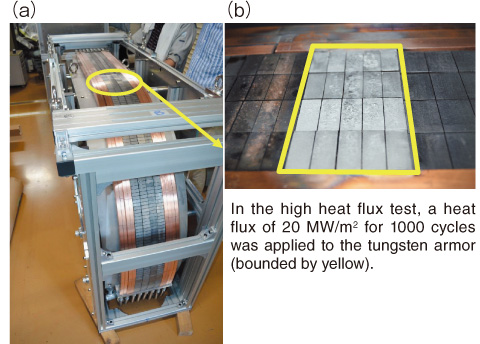
The high-performance tungsten divertor flat panel components developed by the Institute of Plasma Physics, Chinese Academy of Sciences, were also tested on an electron gun at 20 MW/m² for 1000 cycles, with a heating duration of 15 s and cooling time of 15 s. During testing, the tungsten surface temperature was maintained below 950 °C. Post-test evaluation of heat transfer performance and damage was conducted via interface inspection and non-destructive testing. [6]
This shows that writing "20 MW/m²" for 10 ms, 1 s, 10 s, and a continuous one minute represents completely different physical meanings. For thermal fatigue issues, the number of cycles is equally important; for thermal shock or ELM-like pulses, single-pulse energy density, pulse width, and repetition rate should be used instead.
IV. From Material Coupons to Divertor Components: Validation Should Be Performed in Layers
| Verify Level | Object | Main Operating Conditions | Key Metrics | Main questions to answer |
|---|---|---|---|---|
| Level 1 | Small Material Specimen | Step heat flux, short-pulse thermal shock | Infrared/Thermal Imaging, Crack Detection, Melting Analysis, Thermal Properties | Where is the material thermal load threshold? |
| Level 2 | Material Loop Sample | 10 to 20 MW/m² cyclic or equivalent conditions | Temperature response, surface morphology, and thermal resistance variation | Is performance stable after the loop? |
| Level 3 | Irradiated / Simulated Irradiation | Re-irradiation followed by high heat flux loading | Thermal conductivity, cracking, recrystallization, residual performance | Does service damage amplify thermal load risks? |
| Level 4 | W/Cu/CuCrZr small module | Active cooling for high heat flux circulation | Surface Temperature, Flow/Pressure Differential, Ultrasonic/Interface | Can the armor, interface, and heat sink work together? |
| Level 5 | Near Full-Size PFC | High heat flux + long pulse + plasma/particle interaction | Heat flux, erosion, retention, NDT, service life | Does this closely match real-world service conditions? |
This tiered validation approach eliminates the need for costly full-scale component testing during materials development. By first using controlled high-heat flux sources to rapidly compare different tungsten grades, coatings, composite structures, and surface conditions, then advancing only a few promising candidates through active cooling modules, post-irradiation re-examination, and plasma coupling verification, we significantly improve materials screening efficiency.
5. A major trend in 2026: from short-pulse tests to long-duration high heat flux
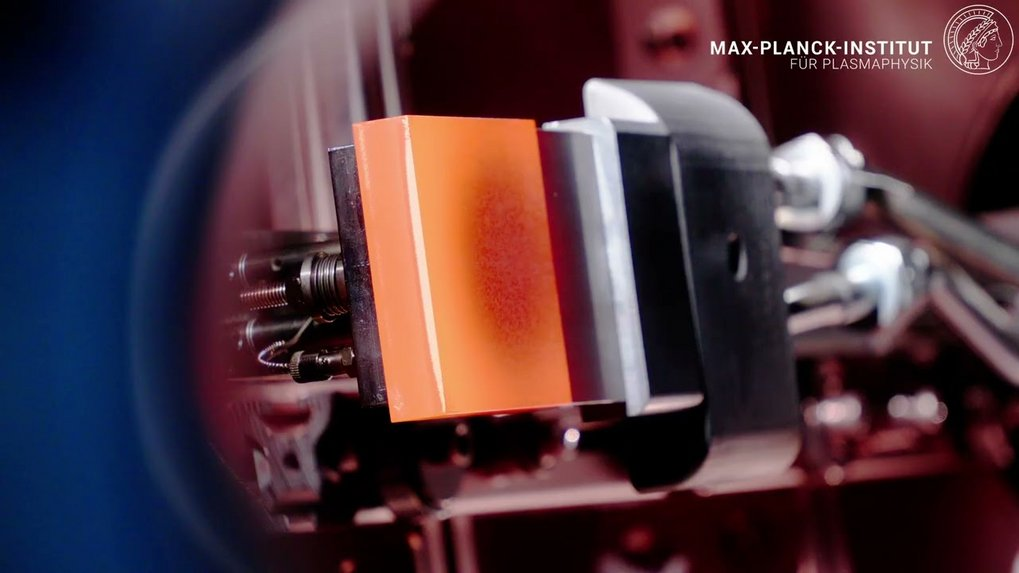
In 2026 3, the Max Planck Institute for Plasma Physics announced an upgrade to the GLADIS high heat flux test facility. GLADIS utilizes two neutral particle beam systems, each rated at approximately 1 MW, to load materials and components; the current platform delivers heat fluxes up to roughly 40 MW/m². The upgrade aims to achieve a 20 MW/m² heat flux with a pulse duration of 1 minutes within one year, extending the high-load duration to approximately 30 minutes by the third year. [7]
This shift is highly representative. Fusion research is evolving from asking whether materials can withstand a single or brief (tens of seconds) heat pulse to assessing, over timescales approaching continuous power plant operation, whether they exhibit thermal creep, thermal conductivity degradation, interfacial fatigue, and cooling capacity loss. Validation metrics are expanding beyond surface cracking to include the full-process temperature field, thermal resistance, deformation, and long-term performance drift.
For materials testing equipment, the stability, uniformity, and closed-loop control of high heat flux sources are becoming increasingly critical. For actively cooled samples, cooling water temperature, flow rate, pressure, and surface temperature must be recorded simultaneously to convert test results into data suitable for thermal design and life analysis.
VI. Beyond high heat flux, two dimensions that laser heating cannot fully replace must be addressed
6.1 Irradiation damage: Thermal conductivity and mechanical properties vary with service history.
Laser, electron beam, or radiative heating are well-suited for thermal flow, thermal shock, and cyclic fatigue screening, but they cannot replicate the displacement damage and transmutation effects caused by 14.1 MeV fusion neutrons. For future fusion reactor materials, thermal properties and microstructural defect states after neutron/ion irradiation must be included in the validation chain.
Key takeaway from the review on tungsten thermal conductivity in 2026: using unirradiated tungsten thermal conductivity for high heat flux calculations may underestimate actual temperature gradients and interfacial thermal stress. [2] Therefore, a more rigorous approach is to first obtain thermal conductivity data across different temperatures and damage doses, then use these data to design subsequent high heat flux experiments and thermo-mechanical models.
6.2 Plasma particle effects: erosion, hydrogen/helium retention, and surface morphology changes reduce lifetime.
The real divertor surface is simultaneously subjected to D/T, He, and impurity particles. Particle bombardment triggers sputtering, hydrogen isotope retention, helium bubble formation, or nanostructure evolution. These changes subsequently affect thermal conduction, surface emissivity, and further thermal shock behavior. [1][8]
Therefore, high heat flux from lasers can effectively address how a material cracks, melts, or undergoes thermal fatigue under specific heat flux and temperature cycling conditions. However, it cannot alone prove full service reliability for fusion plasma-facing components (PFMs). Final material qualification still requires integration with particle/plasma exposure, irradiation, and component-level active cooling tests.
7. What should be recorded for a more complete 20 MW/m² high heat flux validation?
- Heat flux input: nominal heat flux, absorbed heat flux, loading area, uniformity, pulse width/duration, number of cycles.
- Thermal Response: Peak Surface Temperature, Temperature Distribution, Heating/Cooling Rates, Backside/Interface Temperatures, and Cycle Drift.
- Cooling boundary: coolant, inlet temperature, pressure, flow rate, pressure drop, and outlet temperature rise.
- Material status: thermal conductivity, density, grain structure, recrystallization, surface roughness, and emissivity (as-received / post-irradiation).
- Damage Indicators: Crack Density, Melting/Re-solidification, Surface Roughening, Interface Debonding, Ultrasonic Anomalies, and Thermal Resistance Increase.
- Post-test analysis: SEM/EDS, EBSD, XRD, cross-sectional microstructure, hardness/mechanical properties, and necessary hydrogen/helium retention analysis.
8. Industry Insights: Fusion Material Validation Shifts from Peak Heat Flux to Operational Service
Several key advances in 2026 point to a shift: the goal of future PFM validation is no longer just proving that a material has a high melting point or that a component can withstand 20 MW/m² for short durations. Instead, it must demonstrate the ability to sustain long-term heat removal under the combined effects of irradiation, cycling, cooling, and particle interactions.
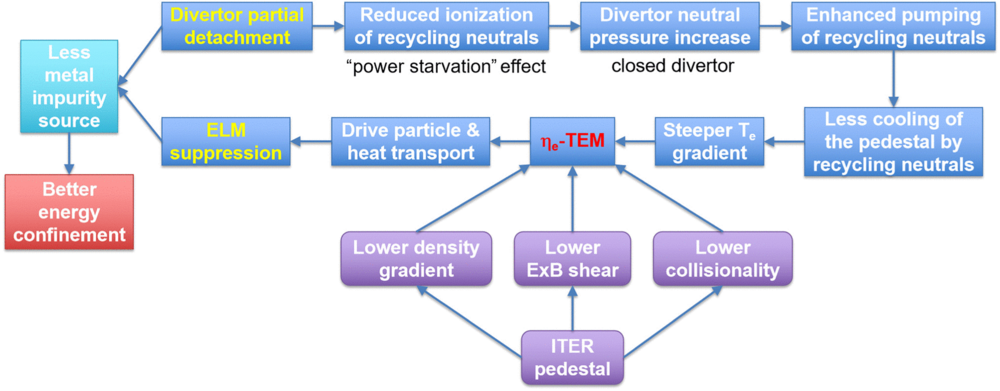
The materials front is developing K-doped tungsten, carbide-reinforced tungsten, tungsten fiber-reinforced structures, and new copper-based heat sink materials; the testing front is advancing toward longer pulses, more realistic cooling boundaries, and higher-level online diagnostics. [9] Meanwhile, plasma operations themselves are reducing target heat loads via strategies such as detachment and ELM suppression. [10] "More heat-resistant materials" and "less heat from the plasma" are becoming two parallel approaches.
For high heat-flux material R&D, this also clarifies the direction for laboratory testing: start with high-response heat sources like lasers and electron beams to rapidly establish the heat flux–temperature–damage relationship; in the mid-stage, incorporate cyclic loading, active cooling, and thermo-mechanical coupling; finally, align with irradiation, particle exposure, and near-full-scale component tests. The true value lies not in maximizing heat flux numbers, but in progressively aligning test boundaries with the actual service conditions materials will face.
Reference Materials
- [1] Li F., Zhang G.-J., Zhou Y., Zhang X. Plasma-facing materials for fusion energy: Historical review, challenges, and future directions. Extreme Materials, 2026, 2(3):100044. DOI: 10.1016/j.exm.2026.100044.
- [2] Review of tungsten thermal conductivity in a fusion power reactor. Nuclear Materials and Energy, 2026, 48:102181. DOI: 10.1016/j.nme.2026.102181.
- [3] ITER Organization. Fusion Divertor.
- [4] Luo Lai-ma, Chen Yu, Yao Gang, Zhu Xiaoyong, Zhu Dahuan, Wu Yucheng. Research progress on thermal load damage behavior of tungsten-based materials for divertors. Acta Metallurgica Sinica, 2025, 61(7):961-978. DOI: 10.11900/0412.1961.2024.00309.
- [5] Gavila P., Riccardi B., Pintsuk G., et al. High heat flux testing of EU tungsten monoblock mock-ups for the ITER divertor. Fusion Engineering and Design, 2015, 98-99:1305-1309. DOI: 10.1016/j.fusengdes.2014.12.006.
- [6] Hefei Institutes of Physical Science, Chinese Academy of Sciences. Yao Damao's team developed a high-performance heat-exhausting tungsten divertor plate component. 2020-12-22.
- [7] Max Planck Institute for Plasma Physics. GLADIS with anniversary pulse and expanded capabilities. 2026-03-31.
- [8] Max Planck Institute for Plasma Physics. Erosion studies in GLADIS.
- [9] Development and down-selection of plasma-facing and high heat flux materials within the European fusion materials program. Nuclear Materials and Energy, 2026, 47:102107. DOI: 10.1016/j.nme.2026.102107.
- [10] Hefei Institutes of Physical Science, Chinese Academy of Sciences. Progress in divertor heat load control and high-performance pedestal-compatible operation modes. 2026-04-01.