
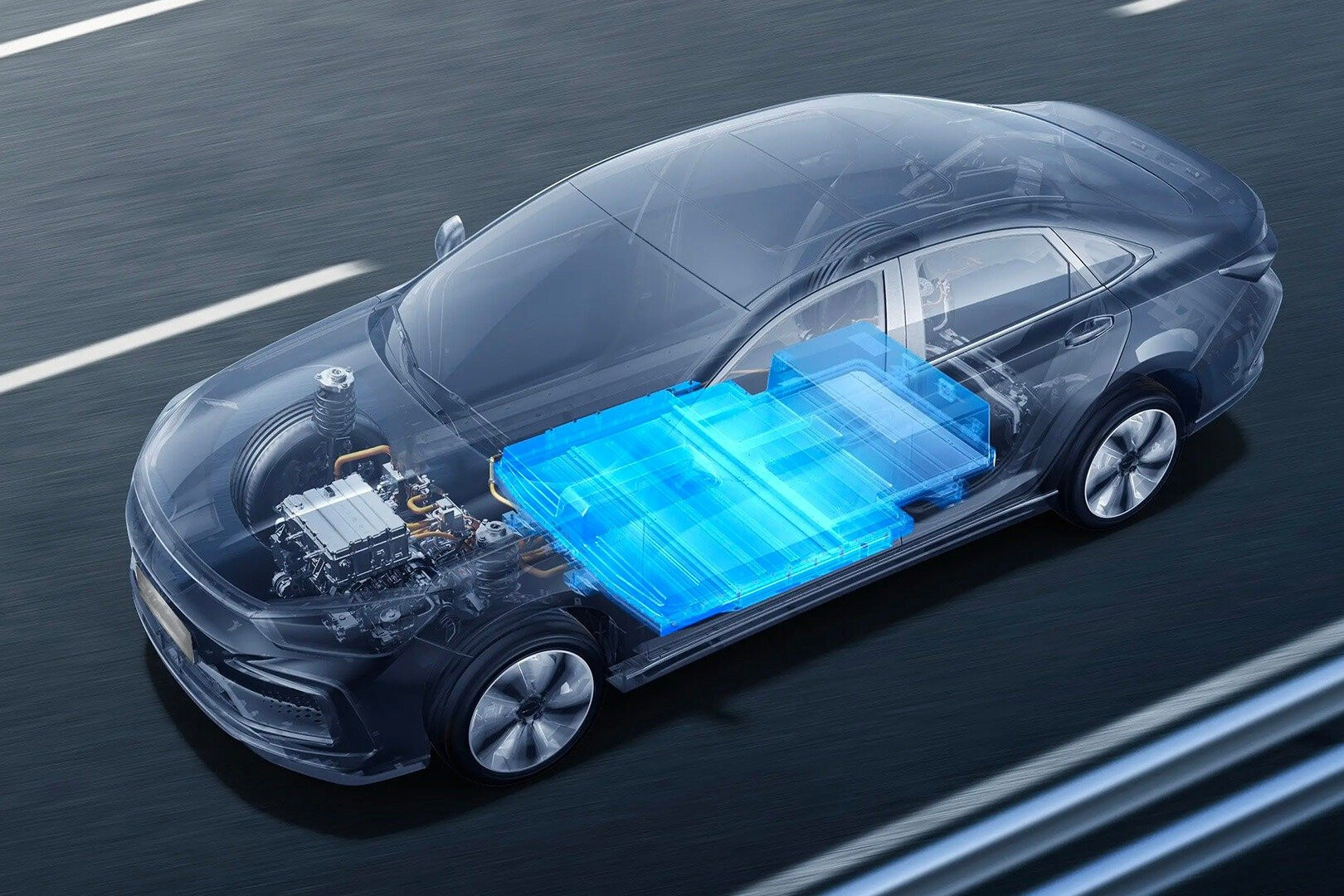
On 2026 9, 23, Chao-Yang Wang, Executive Director of the Electrochemical Safety Research Institute (ESRI) at UL Research Institutes, delivered a presentation titled "Fast-Charging Batteries: From a Chemistry Problem to a Heating Problem" at the University of Maryland. The abstract highlights an apparent paradox in minute-level fast charging: low temperatures slow down ion transport and interfacial kinetics, requiring extended preheating, while sustained high temperatures accelerate side reactions and compromise safety and longevity. The core strategy is not simply "heating the battery," but actively shaping an optimal temperature profile before and during fast charging—maintaining elevated temperatures only when high reaction rates are needed, then rapidly returning to lower temperatures post-charging. [1]
This article does not claim "higher temperature means faster charging." The real engineering challenge is: given a specific cell chemistry, SOC, C-rate, and ambient temperature, how to simultaneously keep preheating speed, fast-charging temperature, single-cell temperature difference, and post-charge cooling within acceptable limits.
I. Why is 10-minute fast charging becoming a "hot topic"?
Fast charging is fundamentally a high-current challenge. To compress charging time to 10–15 minutes, cells often need to operate at 4C–6C or higher. Elevated currents amplify ohmic losses, polarization, and mass transport limitations. Especially at low temperatures or high states of charge (SOC), the lithium-ion intercalation rate in graphite anodes may lag behind the external charging rate. This can drive the anode potential below 0 V (vs. Li/Li⁺), triggering lithium plating. Plating causes irreversible capacity loss and increases risks of internal short circuits and safety hazards. [2][4]
However, raising the temperature creates a dual effect. On one hand, it improves ionic conductivity, solid-phase diffusion, and interfacial reaction rates, reducing polarization and mitigating lithium plating risks. On the other hand, high temperatures accelerate SEI growth, electrolyte side reactions, and material aging. Therefore, fast charging does not require "minimum-temperature operation." Instead, it demands "leveraging higher temperatures to enhance kinetics within a limited timeframe while avoiding prolonged exposure to high heat."[2][3]
A 2025 review on ultra-fast charging thermal management focused on high C-rates of 6C and above, highlighting that significant temperature rise and gradients under ultra-fast charging conditions make the battery thermal management system critical for long-term lifespan and safe operation. A domestic 2026 review in "Power Technology" also identified the risk domain formed by temperature, SOC, and current density, along with the "insulate during charging–rapid heat dissipation" strategy, as key pathways for fast-charging design. [5][6]
II. Asymmetric Temperature Modulation: Not "sustained high temperature," but "short-duration high temperature."
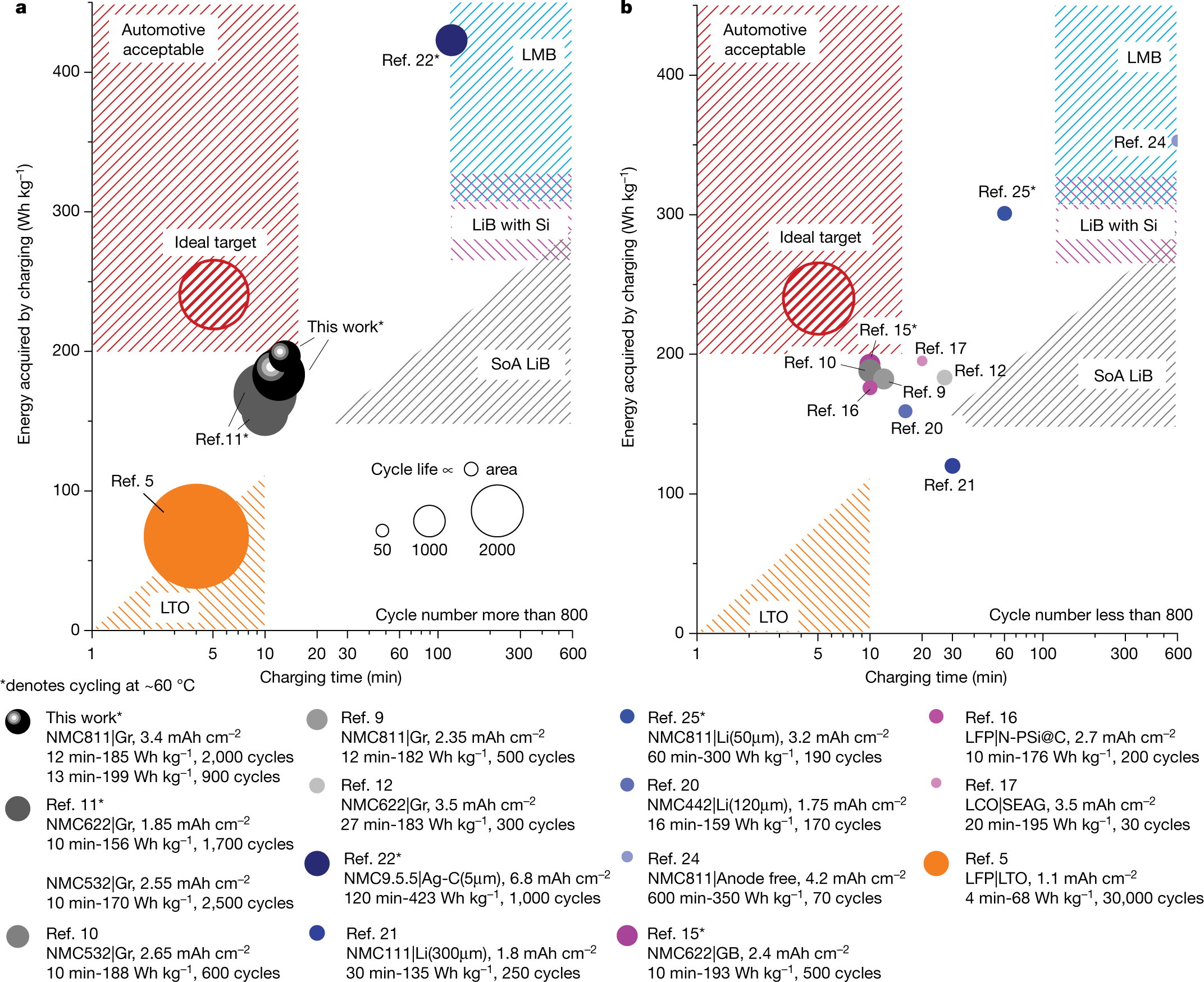
The Wang team introduced Asymmetric Temperature Modulation (ATM) in 2019: during fast charging, cell temperature is raised to reduce polarization and lithium plating risks; after charging completes, the cell is cooled rapidly, limiting high-temperature exposure to approximately 10 minutes within the fast-charging window. [2]
This study was validated using an industrialized electrode system. A 9.5 Ah, 170 Wh/kg cell cycled at 60°C to 80% SOC at 6C charging rate achieved 1700 cycles before reaching a 20% capacity loss threshold, whereas a room-temperature 6C fast-charging control cell lasted approximately 60 cycles. Another 35 Ah, 209 Wh/kg cell retained 91.7% capacity after 2500 ultra-fast charge cycles. Note that these figures apply only to the specific cells, materials, and control protocols used; they cannot be extrapolated to all power batteries. [2]
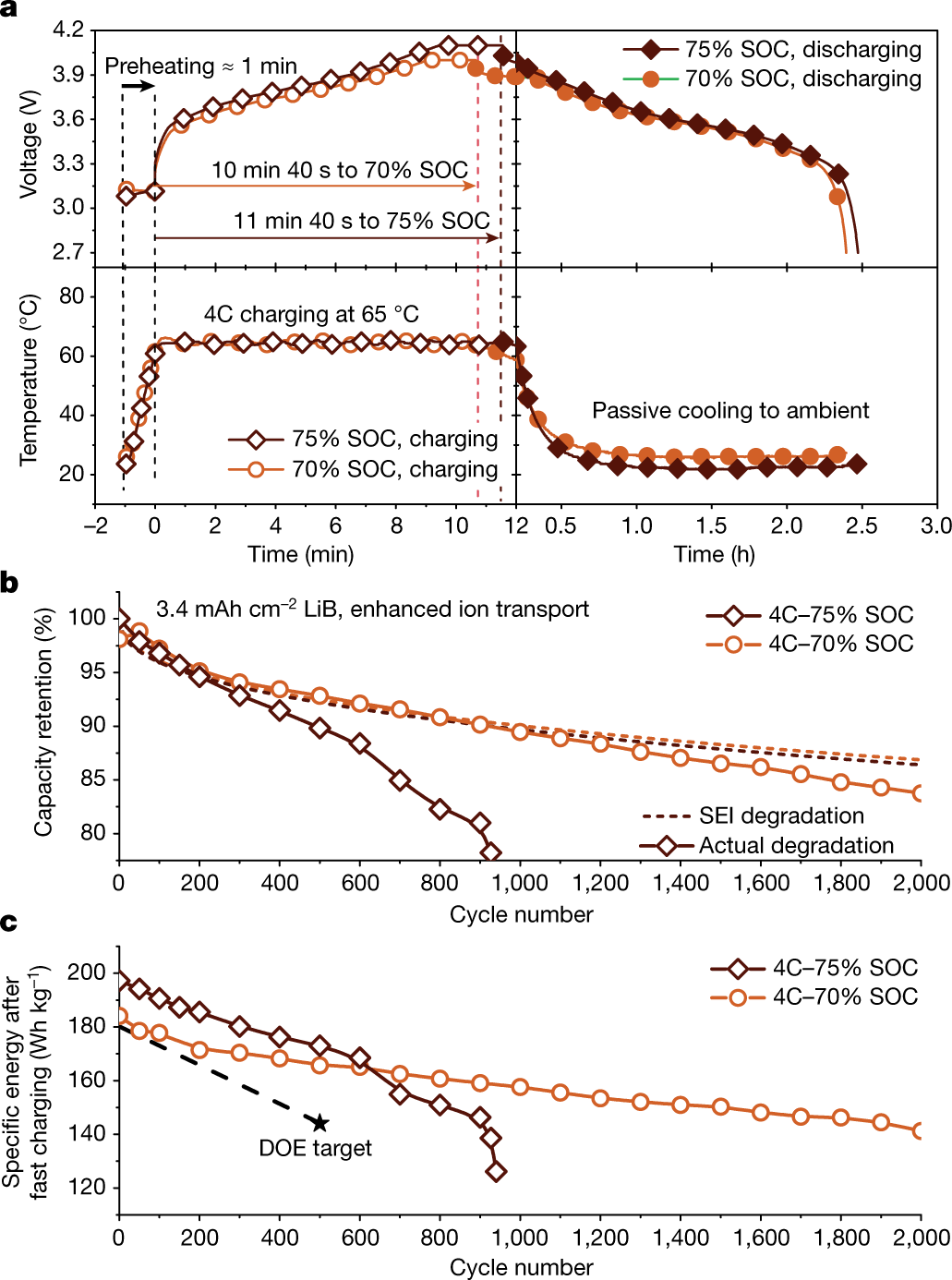
In 2022, Nature further applied this approach to higher-energy-density cells. The report states that a cell with 265 Wh/kg can be charged to 75% SOC in approximately 12 minutes and sustain over 900 cycles, or charged to 70% SOC in about 11 minutes and last for more than 2000 cycles. The typical temperature profile in the paper includes preheating to approximately 65°C for about 1 minutes, followed by 4C fast charging, and then dissipating heat to the environment after charging is complete. [3]
3. True Fast-Charging Thermal Management: Beyond "Extreme Cooling"
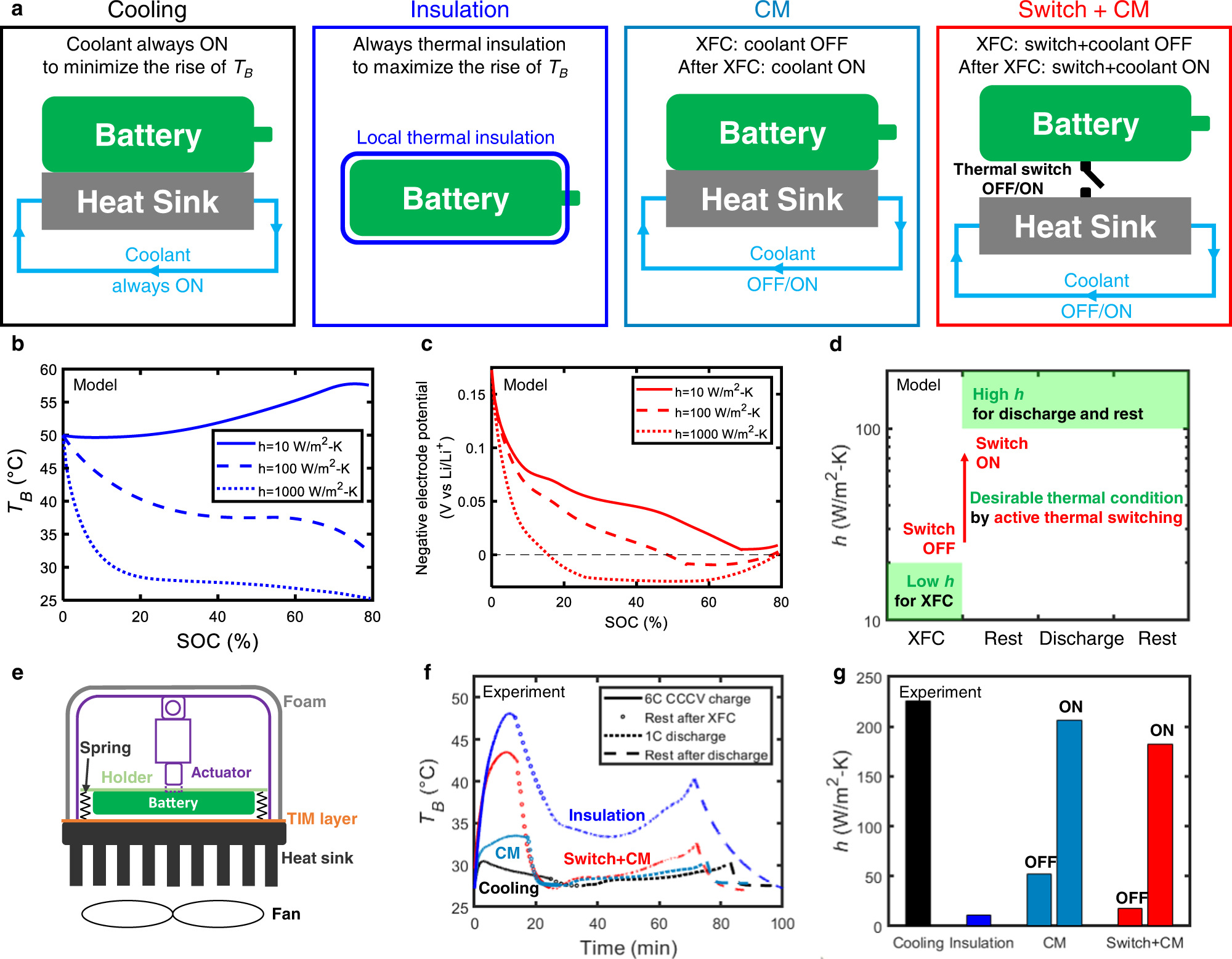
Traditional thermal management often aims to cool batteries as much as possible. However, ultra-fast charging introduces a new trade-off: excessive cooling during fast charging can drive cell temperatures too low, increasing risks of polarization and lithium plating; conversely, maintaining heat throughout the process leads to elevated average post-charge temperatures, accelerating side reactions. As a result, thermal management is shifting from fixed cooling intensity to "switchable thermal boundaries."
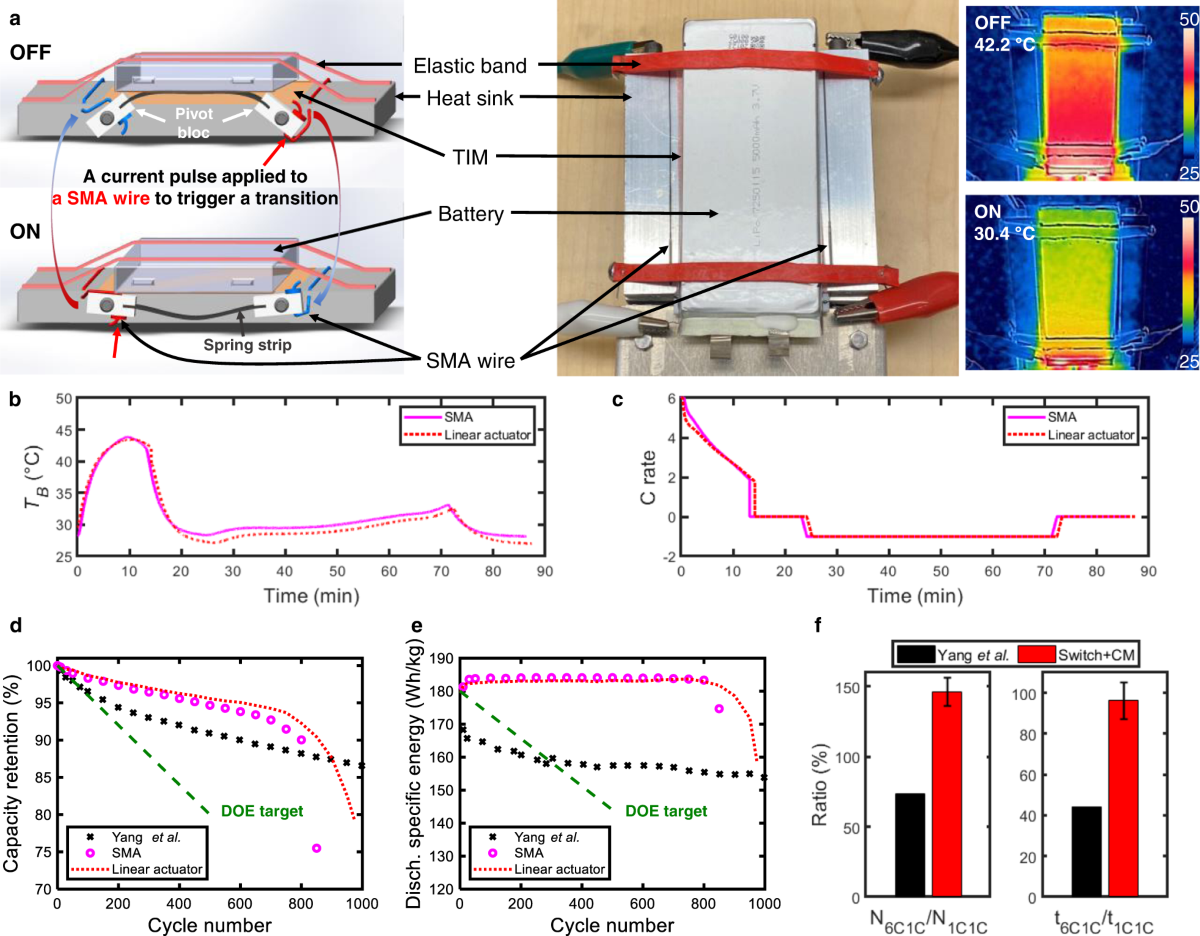
A 202023 Nature Communications study introduced Active Thermal Switching (ATS): during fast charging, it reduces effective heat transfer between the battery and cooling system to maintain a temperature optimal for rapid charging; after charging completes, it rapidly establishes thermal contact with the heat sink and activates cooling. The research used 5 Ah commercial C||LCO pouch cells, charged at 6C to 80% SOC. The ATS approach achieved 773 ultra-fast charge cycles—exceeding the U.S. DOE target of 500 cited in the paper—while preserving post-fast-charging specific energy. [4]
These results indicate that fast-charging thermal management is evolving from a simple cooling system to a dynamic thermal control system capable of switching between heating, insulation, and cooling. For the vehicle as a whole, the priority should be optimizing the entire charging process's temperature trajectory, rather than solely pursuing the lowest average temperature.
IV. New research from 9/22 also shows: materials and thermal management are being optimized together.
Improving fast charging via temperature trajectory on the system side does not mean material-side progress can halt. On 9 22, Pacific Northwest National Laboratory (PNNL) published a study in the Journal of The Electrochemical Society detailing a LiFSI–LiPF₆ dual-salt controlled solvation electrolyte developed by its team for graphite||high-nickel NMC811 cells, enhancing electrochemical and thermal stability within the −20~60℃ range. [7]
The PNNL abstract indicates that the system maintains over 78% capacity retention after 300 cycles at 60°C and exhibits lower heat release under full charge conditions, even during overcharge tests up to 4.8 V. Notably, this study primarily addresses wide-temperature operation and thermal stability rather than directly validating "10-minute fast charging." A more significant trend it reflects is that next-generation fast charging will rely not solely on thermal management or new materials, but on the synergistic design of materials, electrolytes, charging protocols, and thermal control. [7]
From an R&D perspective, future fast-charging performance shouldn't be defined by charge time alone. It must also specify energy delivered, cycle life, operating temperature range, cell-to-cell temperature variance, and safety margins. Only when all these metrics are met does a 10-minute fast charge hold engineering significance.
5. To verify 10-minute fast charging, what data should be checked on the test platform?
| Phase | Suggested Follows | Testing Objective | Instructions |
|---|---|---|---|
| Pre-launch phase | Initial temperature, preheating time, heating rate, maximum temperature difference ΔT | Determine if the low-temperature cell can quickly enter the fast-charging window. | Temperature data should be synchronized with current, voltage, and SOC time axes. |
| Fast Charging Phase | C-rate, current density, SOC, maximum temperature, average temperature, temperature gradient ∇T | Assess thermal-electrochemical stability and identify risks of local overheating and lithium plating. | Temperature data should be synchronized with current, voltage, and SOC time axes. |
| Post-charge phase | Cool-down time, cooling rate, residual heat, ambient temperature | Limit exposure to high temperatures to reduce cumulative side effects. | Temperature data should be synchronized with current, voltage, and SOC time axes. |
| Iteration Phase | Capacity retention, internal resistance/EIS, temperature trajectory drift, cell consistency | Verify whether the thermal strategy truly extends battery lifespan, rather than just improving a single charge cycle. | Temperature data should be synchronized with current, voltage, and SOC time axes. |
| Security Phase | Abnormal temperature rise, thermal runaway trigger conditions, propagation characteristics, gas/pressure | Fast-charging performance and thermal safety must be validated separately; neither can substitute for the other. | Temperature data should be synchronized with current, voltage, and SOC time axes. |
For R&D-level testing, a single thermocouple is insufficient. During fast charging, pouch, prismatic, or cylindrical cells can develop in-plane and through-thickness temperature gradients. We recommend synchronously collecting data from multiple thermocouples, infrared thermal imaging, current, and voltage. When studying temperature uniformity, clearly define the measurement locations, sampling frequency, surface emissivity settings, and environmental boundary conditions.
Additionally, fast-charging thermal management validation and thermal runaway testing operate at different levels. The former focuses on temperature trajectories, lithium plating, and lifespan under normal/controlled fast-charging conditions; the latter addresses runaway initiation and propagation under abnormal conditions such as overcharging, external heating, and internal short circuits. A 202024 domestic review similarly treated lithium plating, thermal management, and active prevention of thermal runaway under fast-charging conditions as interrelated yet distinct evaluation topics [8].
VI. Industry Insight: Fast-charging competition is shifting from "charging power" to "thermal-electrochemical synergy control."
Past discussions on fast charging for new energy vehicles focused primarily on charger power and peak charge rates. However, as targets aim for 10~15 minutes or even less, the cell's temperature window, heat conduction paths, and post-charge dissipation capabilities are becoming equally critical constraints. The presentation titled "From Chemical Issues to Heating Challenges" on 9 23 is particularly noteworthy because it shifts the competitive focus of fast charging from single materials or protocols to a system-level synergy spanning electrochemistry, thermal management, and safety. [1]
Current research points to a clear roadmap: rapid preheating at low temperatures, maintaining optimal temperatures for mass transfer and reactions during fast charging, and quick heat dissipation immediately after charging. At the material level, more stable electrolytes and interfacial chemistry expand the allowable temperature window. Ultimately, the BMS must dynamically adjust thermal management and charging protocols based on ambient temperature, SOC, state of health, and cell-to-cell variations. [3][4][6][7]
This shifts the focus of validation testing. The true value of fast-charging tests lies not in proving that a cell "can charge for 10 minutes at a specific temperature," but in establishing a complete data chain linking ambient temperature, preheating process, charging rate, thermal field, cooling process, cycle life, and safety boundaries. For the new energy vehicle industry, the upper limit of future fast-charging capability will increasingly depend on whether this data chain can be accurately measured, stably controlled, and reliably reproduced over time.
Reference Materials
- [1] University of Maryland. Fast-Charging Batteries: From a Chemistry Problem to a Heating Problem. Event, 2026-09-23.
- [2] Yang X.-G., Liu T., Gao Y., et al. Asymmetric Temperature Modulation for Extreme Fast Charging of Lithium-Ion Batteries. Joule, 2019, 3: 3002-3019. DOI: 10.1016/j.joule.2019.09.021.
- [3] Wang C.-Y., Liu T., Yang X.-G., et al. Fast charging of energy-dense lithium-ion batteries. Nature, 2022, 611: 485–490. DOI: 10.1038/s41586-022-05281-0.
- [4] Zeng Y., et al. Extreme fast charging of commercial Li-ion batteries via combined thermal switching and self-heating approaches. Nature Communications, 2023, 14: 3415. DOI: 10.1038/s41467-023-38823-9.
- [5] Fekri Y., Heyhat M.M., Jedari Salehzadeh F., et al. A review of thermal management systems for extreme fast charging Li-ion batteries. Applied Thermal Engineering, 2025, 279: 127870. DOI: 10.1016/j.applthermaleng.2025.127870.
- [6] Shi Qingxuan, Dai Hao, Xia Yuhua, Yu Wenjun, Xu Zhongling. Research progress and prospects of fast charging capability for lithium-ion batteries. Journal of Power Sources, 2026, 50(5): 787-798.
- [7] Kautz D.J., Lim H.-S., Faruk O., et al. Advanced LiFSI-LiPF6 Electrolyte for Wide-Temperature and Thermally Stable Lithium-Ion Batteries. Journal of The Electrochemical Society, 2026, 173(6): 060513. DOI: 10.1149/1945-7111/ae5348. PNNL Research Entry Updated: 2026-09-22.
- [8] Liu Jianchao, Guo Weiwu, Lu Deng, Yang Liming, Jiang Caisheng. Research Progress on Active Prevention and Control of Thermal Runaway in High-Power Fast Charging of Power Lithium-Ion Batteries. Electrical & Energy Management Technology, 2024(11): 10-19.
- [9] Li Haiqiang, Chang Hong, Ma Tianyi. Analysis of thermal management technology for lithium-ion power batteries. Battery Industry, 2025, 29(2): 77-86.