
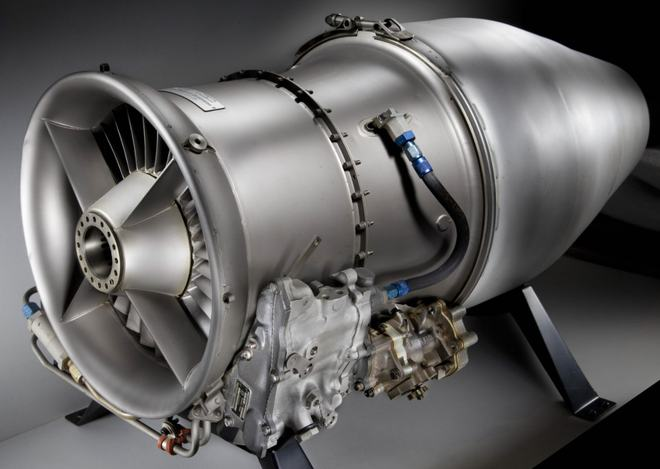
On 2026, 9 21, Reuters reported that constrained supplies of key raw materials are prompting the aviation coatings supply chain to re-evaluate thermal barrier coating (TBC) systems for turbine engines that were previously replaced by modern materials. The National Research Council of Canada (NRC), in collaboration with industry partners, is assessing zirconia and other non-rare-earth ceramic oxides. Oerlikon Metco stated that, in addition to its existing non-rare-earth products, it is also developing TBC routes stabilized with magnesium, calcium, and similar elements. [1]
The technical significance of this work goes far beyond "finding a yttrium-free powder." The 7–8 wt.% Y₂O₃-stabilized ZrO₂ (YSZ) used in modern aero-engines is the industry standard because it achieves a proven balance among low thermal conductivity, thermal expansion compatibility, fracture toughness, phase stability, and cyclic durability. Any changes to the stabilizer, microstructure, or spray process invalidate previous data on thermal cycling life, CMAS resistance, erosion performance, and interface failure.
1. Latest Update: Key Raw Material Issues Are Now Shaping Aviation Coating Material Strategies
Reuters reported on 9/21 that two approaches are being pursued: first, NRC is re-evaluating zirconia and other non-rare-earth ceramic oxides used in the 70–80s; second, Oerlikon Metco is developing non-rare-earth thermal barrier coatings stabilized with magnesium or calcium oxide. NRC researcher Rogerio Lima emphasized in the report that today's characterization tools, process controls, and engineering design capabilities far exceed those from 50 years ago, making "old materials, new designs" a worthy subject for renewed research. [1]
This is not a complete restart. Oerlikon's current material portfolio still includes CaO-stabilized ZrO₂ and MgO-stabilized ZrO₂ products: Metco 201NS is CaO-stabilized zirconia, and Metco 210NS-1 is MgO-stabilized zirconia; meanwhile, the 8YSZ series remains a core component of its standard thermal barrier coatings. [2-4] Thus, the real industry challenge today is not whether non-rare-earth zirconias exist, but whether new powder designs, deposition processes, and structural optimizations can advance these systems to meet the performance requirements of modern aerospace hot-section components.
For aero-engines, this threshold is high. The coating must remain stable under the combined effects of repeated start-stop cycles, high-temperature oxidation, particle erosion, CMAS deposition, temperature gradients from internal cooling, and long-term sintering. While material supply chains can catalyze alternative research, only reliability data will ultimately determine whether a coating qualifies for flight use.
II. Why is 8YSZ difficult to replace with "equivalent compositions"?
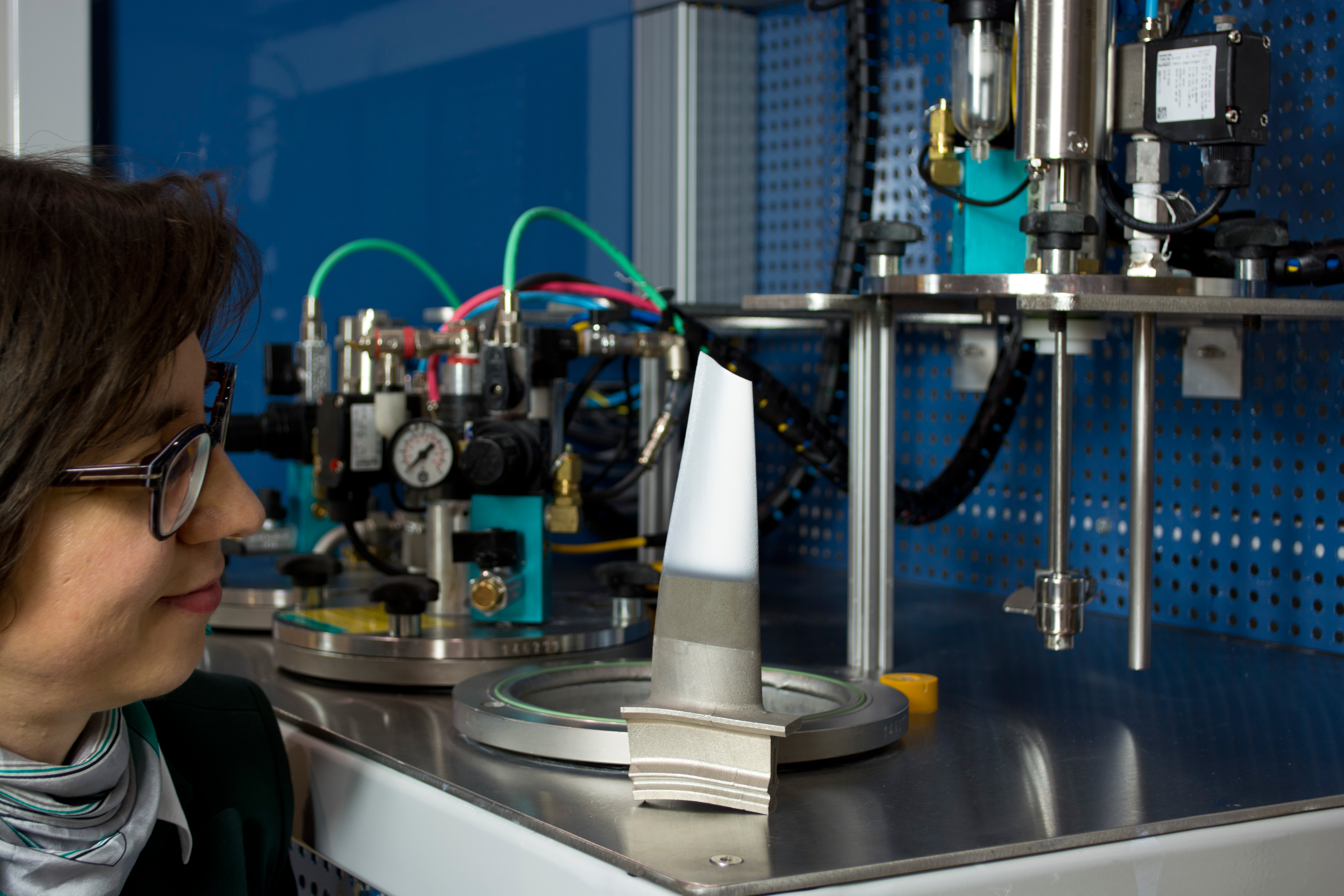
Pure ZrO₂ undergoes phase transformations and associated volume changes with temperature variations, necessitating stabilizers to control its phase composition. 7–8 wt.% Y₂O₃-stabilized zirconia has long served as the benchmark thermal barrier coating (TBC) material for aerospace and gas turbine applications not because of any single extreme property, but due to its well-balanced overall performance: low thermal conductivity, high coefficient of thermal expansion, adequate fracture toughness, good strain tolerance, and a mature foundation in APS, EB-PVD, and SPS processing. [5-7]
However, YSZ is not a "perfect material." At higher temperatures, it faces sintering, reduced phase stability, and increased elastic modulus. In environments containing sand or volcanic ash, CMAS melts can penetrate through pores and cracks, leach out stabilizers, and induce phase transformation and cracking. This is the driving force behind the continued development of rare-earth zirconates, high-entropy zirconates, dual-layer ceramics, and novel spray microstructures over the past decade. [7-9]
Replacing the stabilizer will shift this equilibrium. Taking Oerlikon's publicly available products as an example, the 8YSZ product Metco 204C-NS has a nominal maximum operating temperature of 1250°C; its traditional CaO-stabilized ZrO₂ product Metco 201NS is rated at 900°C, while early MgO-stabilized ZrO₂ series were primarily targeted for thermal barrier applications around 900°C. [2-4] These figures do not directly represent the next-generation alternative systems currently under development, but they clearly demonstrate that historical formulations and modern 8YSZ are not simply a "1:1" material swap.
III. With the change in Material One, what needs to be re-established first is not the "maximum temperature," but the five performance relationships.
3.1 Phase Stability and Thermal Properties: Low thermal conductivity does not guarantee long-term insulation stability.
For alternative materials, the primary concerns are whether the crystal phase remains stable after prolonged exposure to high temperatures and repeated thermal cycling, whether thermal conductivity drifts, and whether sintering causes pore shrinkage and an increase in elastic modulus. For TBCs, thermal conductivity, coefficient of thermal expansion, and elastic modulus are not independent; together they determine temperature gradients and thermal stresses.
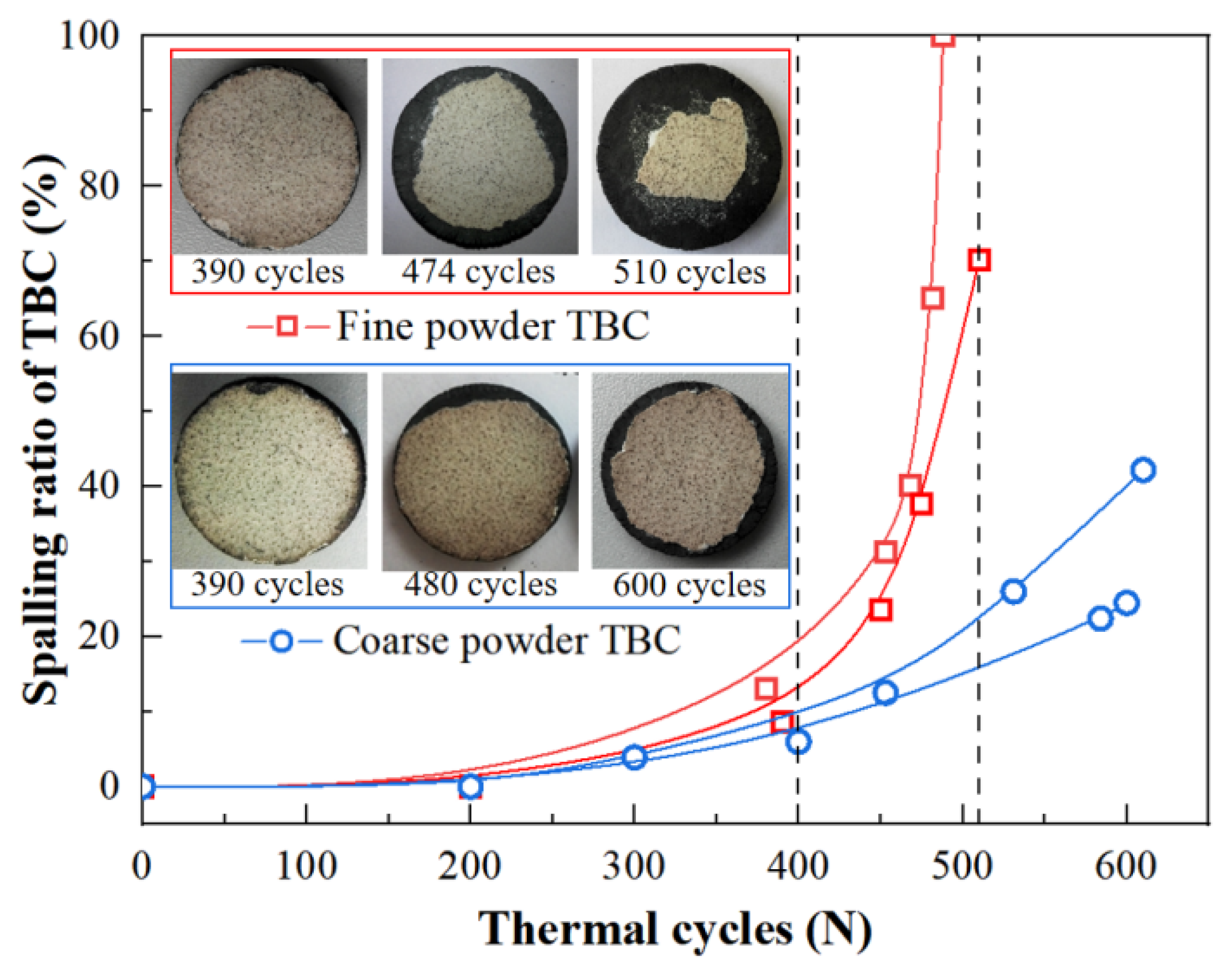
This is also why altering only the spraying medium and microstructure within the same chemical system can lead to significant differences in service life. An SPS-YSZ study published in 2026 9 reported that columnar coatings formed using a specific non-flammable solvent exhibited a 97.4% improvement in thermal cycling life compared to the water-based YSZ control system described in the paper. However, when compared to historical data from an ethanol-based SPS-YSZ system, its erosion rate was approximately 7 times higher. [10] This demonstrates that improving a single performance metric does not equate to successful overall replacement.
3.2 Thermal Cycling and Temperature Gradient: The Test That Best Amplifies Material Differences
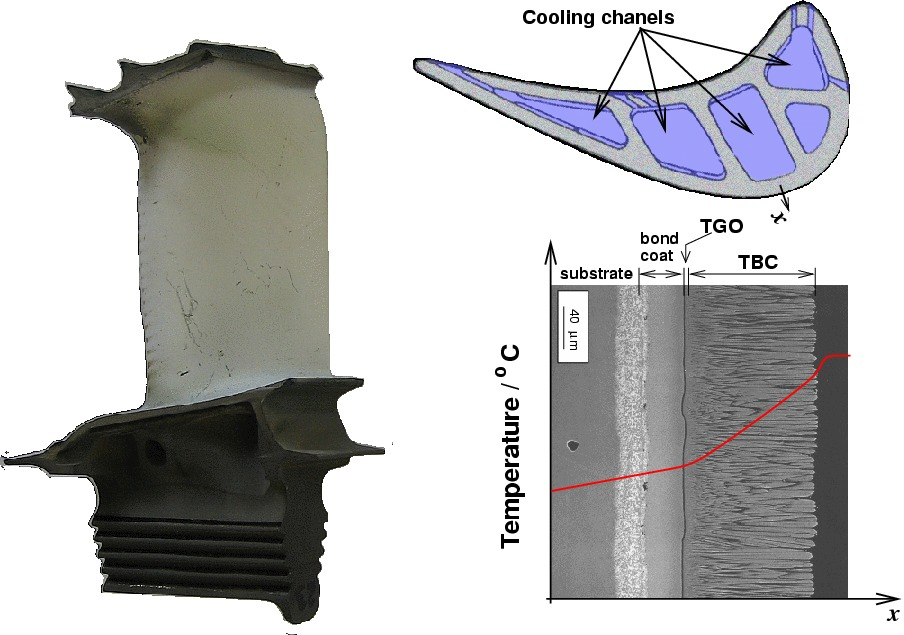
The engine hot section does not involve placing the entire blade in a uniform-temperature furnace. Hot gas enters from the outer surface while internal cooling channels continuously remove heat, creating significant temperature gradients between the ceramic layer, TGO, bond coat, and superalloy substrate. Each start-stop cycle叠加thermal expansion mismatch, TGO growth, and residual stress evolution.
Therefore, alternative materials must undergo at least two types of validation: "uniform thermal cycling" and "surface heat flux cycling with temperature gradients." The former is suitable for rapidly comparing material and interface lifetimes, while the latter more closely replicates real blade boundary conditions, revealing localized delamination, edge cracking, and thermal gradient stress issues that uniform furnaces may miss.
3.3 TGO-Substrate Compatibility: Replacing the ceramic layer may alter the interfacial failure path.
TBC failure is often not due to ceramic burnout, but rather oxidation of the bond coat forming TGO, which induces stress concentration near the TGO/ceramic interface and leads to progressive delamination. The thermal expansion coefficient, elastic modulus, fracture toughness, and chemical compatibility with Al₂O₃ of alternative materials all influence this process.
Therefore, beyond recording cycle counts, failure location—whether within the ceramic, at the TGO/topcoat interface, or near the bond coat—must be determined using cross-sectional SEM/EDS, TGO thickness statistics, and crack position/spallation area analysis. Only by correlating "life numbers" with specific failure mechanisms can material substitution optimization deliver engineering value.
3.4 CMAS and Hot Corrosion: Alternative Materials Must Be Compared Beyond Clean-Air Conditions
Inorganic particles such as sand and volcanic ash ingested by jet engines can form CaO–MgO–Al₂O₃–SiO₂ (CMAS) melts at high temperatures. Once CMAS infiltrates thermal barrier coating (TBC) pores, it reduces strain tolerance and may trigger dissolution–reprecipitation reactions with the ceramic, altering the distribution of stabilizers. The open review from 2024 systematically summarizes the mechanisms of CMAS penetration, phase transformation, and spallation in YSZ. [8]
Alternative materials must also undergo CMAS, molten salt, and combustion environment validation; the absence of yttrium does not guarantee improved corrosion resistance. Research from 2025 on CaO-stabilized ZrO₂ demonstrated that under combined Na₂SO₄+NaCl molten salt exposure and thermal cycling, thermo-mechano-chemical coupling damage occurs due to chemical reactions, thermal mismatch stresses, and crack propagation. [11]
3.5 Erosion and Particle Abrasion: Low thermal conductivity materials may not withstand real-world airflow.
When aircraft operate in dusty or sandy environments, turbine thermal barrier coatings are also subjected to high-velocity impacts from solid particles. While high porosity and columnar structures help reduce thermal conductivity and improve strain tolerance, they may compromise erosion resistance.
This is a common pattern in recent studies: the aforementioned 2026 SPS-YSZ research achieved longer thermal cycle life and reduced CMAS penetration area, yet its erosion performance did not improve correspondingly. [10] IMAT 2026 also conducted particle erosion comparisons between high-entropy zirconates and YSZ under identical microstructural conditions to isolate the effects of "chemical composition" from those of "microstructural architecture." [12]
IV. How should validation be organized to evaluate a "low-rare-earth" or "rare-earth-free" thermal barrier coating (TBC) for aviation applications?
| Verify Level | Main Test | Key Variables | Main Output | Answered question |
|---|---|---|---|---|
| Material-level | XRD / Thermal Properties / Sintering | Temperature, Time, Phase Composition | Phase stability, thermal conductivity, CTE | Does the material remain in the target state after high-temperature exposure? |
| Coating Level | Bond Strength / Microstructure | Thickness, porosity, residual stress | Bonding, cracks, and pore networks | Can the new process be manufactured stably? |
| Loop Level | thermal cycling / thermal shock | Peak Temperature, Rate, Cooling, Cycle Count | Lifetime, spallation rate, TGO | How to disable after repeated start-stop cycles? |
| Environment-level | CMAS / Hot Corrosion / Erosion | Deposition amount, atmosphere, particle speed/angle | penetration, erosion, chemical reaction | Does a complex service environment affect lifespan? |
| Gradient | Surface heat flux + Backside cooling | Heat flux, cooling, temperature difference | Surface/back temperature, cracks, thermal resistance | Can it still operate under real blade thermal boundary conditions? |
The key to validation is first using material-level and small-scale thermal cycling to quickly eliminate routes that clearly fail requirements, then subjecting the few remaining candidate systems to high-cost verification with temperature gradients, cooling boundaries, and particle environments.
5. What new requirements does the adoption of alternative materials introduce for thermal environment testing?
As the TBC material system evolves from a single, mature YSZ formulation to include multiple candidate stabilizers, multi-layer architectures, and novel spray microstructures, test equipment must become more flexible. While conventional fixed-temperature furnaces remain suitable for isothermal oxidation and basic cycling, investigating high heat flux, one-sided heating, rapid thermal transients, and thermal gradients requires localized, programmable thermal loading on the specimen surface alongside synchronized measurements of surface temperature, backside temperature, and heat flux response.
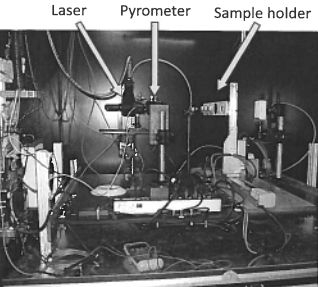
At the laboratory stage, controllable surface heat flux can be established using radiation sources such as lasers or quartz lamps to rapidly compare thermal shock and thermal cycling across different coating systems. For tests that more closely replicate engine service conditions, additional factors like backside cooling, gas flow erosion, CMAS deposition, or combustion environments should also be applied. It is important to note that while laser or radiant heating efficiently simulates "heat input and temperature gradients," it cannot fully replace the combined effects of gas chemistry, particle erosion, and the complete environment of a real engine.
From a test engineering perspective, material substitution makes "controlled, measurable, and repeatable" thermal environment platforms even more critical: as chemical compositions and process routes iterate rapidly, maintaining identical heat flux, cooling, and cycling boundaries is the only way to isolate and compare material differences.
VI. Industry Insights: Supply chains drive "substitution research," while true qualification for production hinges on re-qualification validation.
This round of TBC replacement research for aviation is noteworthy as it introduces "raw material availability" as a new design constraint to a problem historically driven by performance. While reducing or eliminating constrained elements offers tangible value for the supply chain, engine reliability standards remain unchanged.
In fact, the opposite is true: the more one transitions from a mature YSZ system to new stabilizers, novel powder processing methods, or advanced multi-layer architectures, the greater the need to re-evaluate phase stability, thermal cycling performance, TGO evolution, CMAS resistance, erosion behavior, and lifetime under thermal gradients. Oerlikon's existing CaO/MgO-stabilized zirconia exhibits a distinct application temperature gap compared to 8YSZ, underscoring that "historically used" materials are not necessarily ready for direct substitution today. [2-4]
At the same time, materials technology continues to advance. 2026 9 latest research is still using SPS microstructure optimization to improve YSZ's thermal cycling and CMAS performance; IMAT 2026 has brought high-entropy salt erosion issues to the forefront. [10][12] Consequently, future aeroengine thermal barrier coatings are more likely to follow a multi-path parallel approach: continued optimization of mature YSZ, advancement of limit performance with rare-earth new materials, and re-entry into validation for no/low-rare-earth systems.
For the test and validation industry, this presents a clear opportunity: while material formulations may vary, high-temperature environments must be reliably reproduced. True professional validation doesn't just prove "how hot" a sample got; it establishes a comparable data chain linking heat flux, temperature gradients, cycling protocols, environmental media, and failure mechanisms.
Reference Materials
- [1] Reuters. Aerospace suppliers test rare-earth alternatives to reduce reliance on China. 2026-09-21.
- [2] Oerlikon Metco. Metco 201NS — Calcium-stabilized zirconia thermal spray powder.
- [3] Oerlikon Metco. Metco 210NS-1 — Magnesia-stabilized zirconium oxide powder.
- [4] Oerlikon Metco. Metco 204C-NS — 8 wt.% Yttria-Stabilized Zirconia.
- [5] Oerlikon Metco: Thermal Barrier Coatings (TBCs) and Their Role
- [6] Kumar A., Moledina J., Liu Y., Chen K., Patnaik P.C. Nano-Micro-Structured 6%–8% YSZ Thermal Barrier Coatings: A Comprehensive Review of Comparative Performance Analysis. Coatings, 2021, 11, 1474. DOI: 10.3390/coatings11121474.
- [7] Failure mechanisms and structural tailoring of YSZ and novel candidates for thermal barrier coatings: A systematic review. Materials & Design, 2022, 220, 111044. DOI: 10.1016/j.matdes.2022.111044.
- [8] Nair R.B., Brabazon D. Calcia-magnesia-alumino-silicate (CMAS) corrosion attack on thermally sprayed thermal barrier coatings: a comprehensive review. npj Materials Degradation, 2024, 8:44. DOI: 10.1038/s41529-024-00462-w.
- [9] Balamurugan A., Jeyapandiarajan P. Degradation mechanisms and design strategies in rare earth element pyrochlore-based thermal barrier coatings (TBCs): A Review. Results in Surfaces and Interfaces, 2026, 100984. DOI: 10.1016/j.rsurfi.2026.100984.
- [10] Das R., Hastak V., Singh P., et al. Suspension plasma-sprayed yttria-stabilized zirconia coatings from a non-flammable solvent: Thermal cycling, erosion, and calcium-magnesium-alumino-silicate behavior. Surface and Coatings Technology, 2026, 539, 133895. DOI: 10.1016/j.surfcoat.2026.133895.
- [11] Uncovering the thermo-mechanical-chemical coupling damage mechanisms of calcia-stabilized zirconia thermal barrier coatings in molten sulfate mixtures. Ceramics International, 2025, 51(19B):29690-29706. DOI: 10.1016/j.ceramint.2025.04.171.
- [12] Bayat F., Vakilifard H., Xavier M.V., Lima R.S., Moreau C., Stoyanov P. Room-Temperature Solid Particle Erosion Behavior of SPS-Deposited High-Entropy Zirconate Topcoats for Thermal Barrier Coatings. IMAT 2026, Québec City, Sep. 30, 2026.