
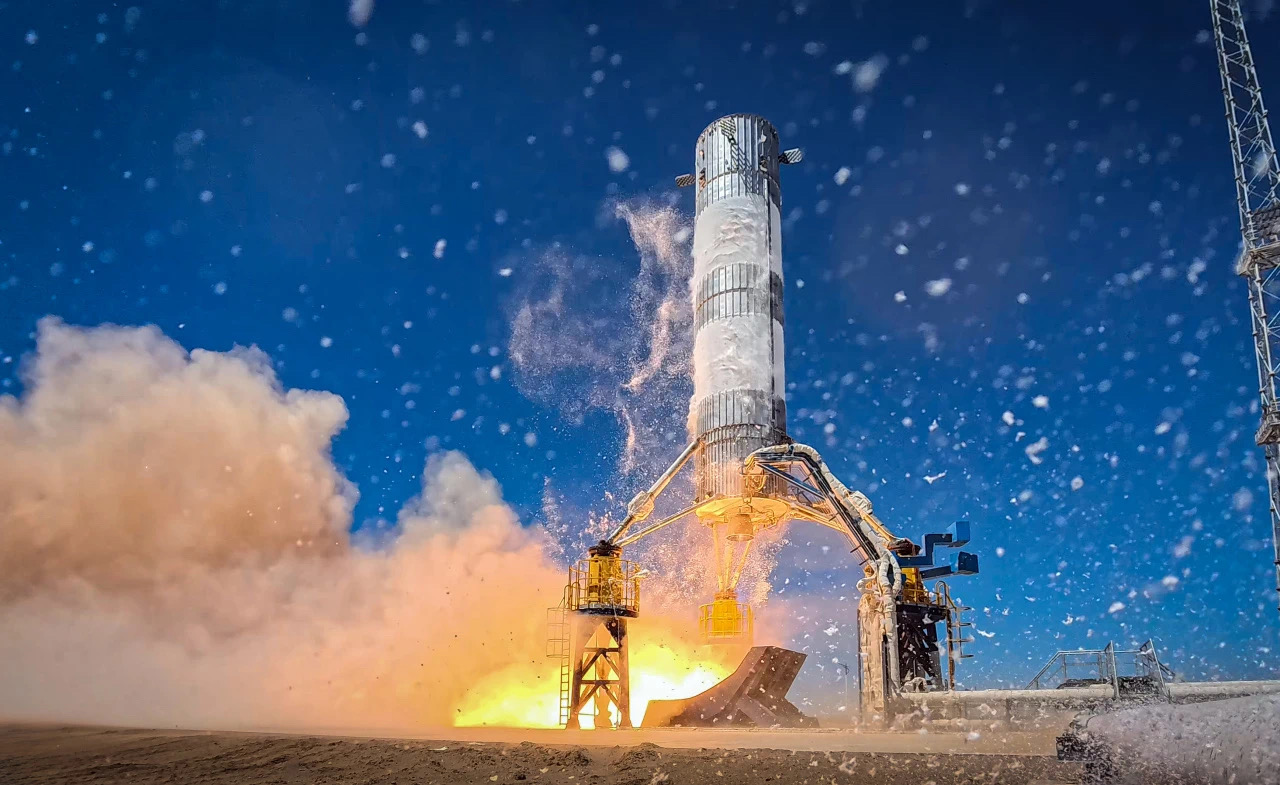
In 2026 year, 9 month, China's commercial aerospace sector sent a clear signal: the industry is shifting from "can rockets be recovered?" to "can they reliably re-fly after recovery?" On 9 month 1, the Zhi Shen Xing No. 1 first flight was successful. Designed for reuse, public data indicates it supports at least 25 re-flights. On 9 month 11, the Zhi Shen Xing No. 1 main engine, Cang Qiong-90, completed an 130-second rated test run and entered reliability verification after over 20 developmental tests. By 9 month 24, industry discussions identified "re-flight cycle, post-recovery inspection, life models, and re-flight criteria" as the next hurdles for reusable rocket commercialization. [1-4]
This means that whether a rocket can truly fly repeatedly depends not only on recovery control technology, but also on a more challenging question: how much service life remains for the structure, engine, thermal protection, and electromechanical systems after exposure to complex thermo-mechanical environments?
I. China's commercial aerospace industry is transitioning from "recovery validation" to "flight re-qualification."
The Zhi Shen Xing-1 marks a key milestone in China's domestic reusable rocket propulsion this year. According to public information from the Beijing Municipal Government and the National Space Administration, the rocket is 52 m in length, has a core stage diameter of 3.35 m, and a launch mass of approximately 283 t. Its first stage integrates 7 Cangqiong-50 liquid oxygen/kerosene engines in parallel, with a design for at least 25 reuse cycles. The primary objective of its maiden flight is to achieve orbit insertion and collect real-world flight data; first-stage recovery and reuse validation will follow in subsequent missions. [1][2]
At the same time, the engine has entered the "life and reliability" phase. The test data for the Tiankong-90 engine released on 9/11 showed that during a 130-second long-duration rated operation, parameters such as thrust, flow rate, and pressure met design requirements; the turbopump, thrust chamber, and valve system operated normally, with thermal environment and vibration characteristics within design margins. After completing over 20 research tests, the project officially moved into the reliability verification testing phase. [3]
More notably, the coverage on 9/24 regarding China's reusable rocket "reusability exam" brought the issue down to engineering closure: after first-stage recovery, tanks, welds, engines, valves, and electrical systems must be inspected, while real flight data is used to validate life models. Future efforts will focus on establishing criteria for which components can fly again directly versus those requiring repair or mandatory replacement. [4]
II. Why does repeated use of "Extreme Thermal and Mechanical Environments" lead to lifespan issues?
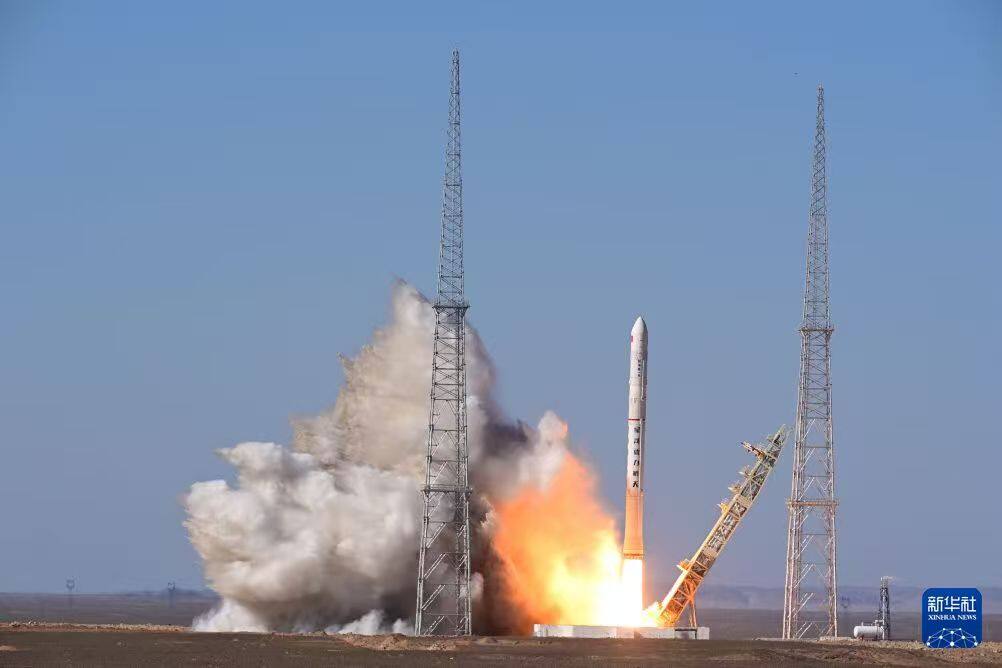
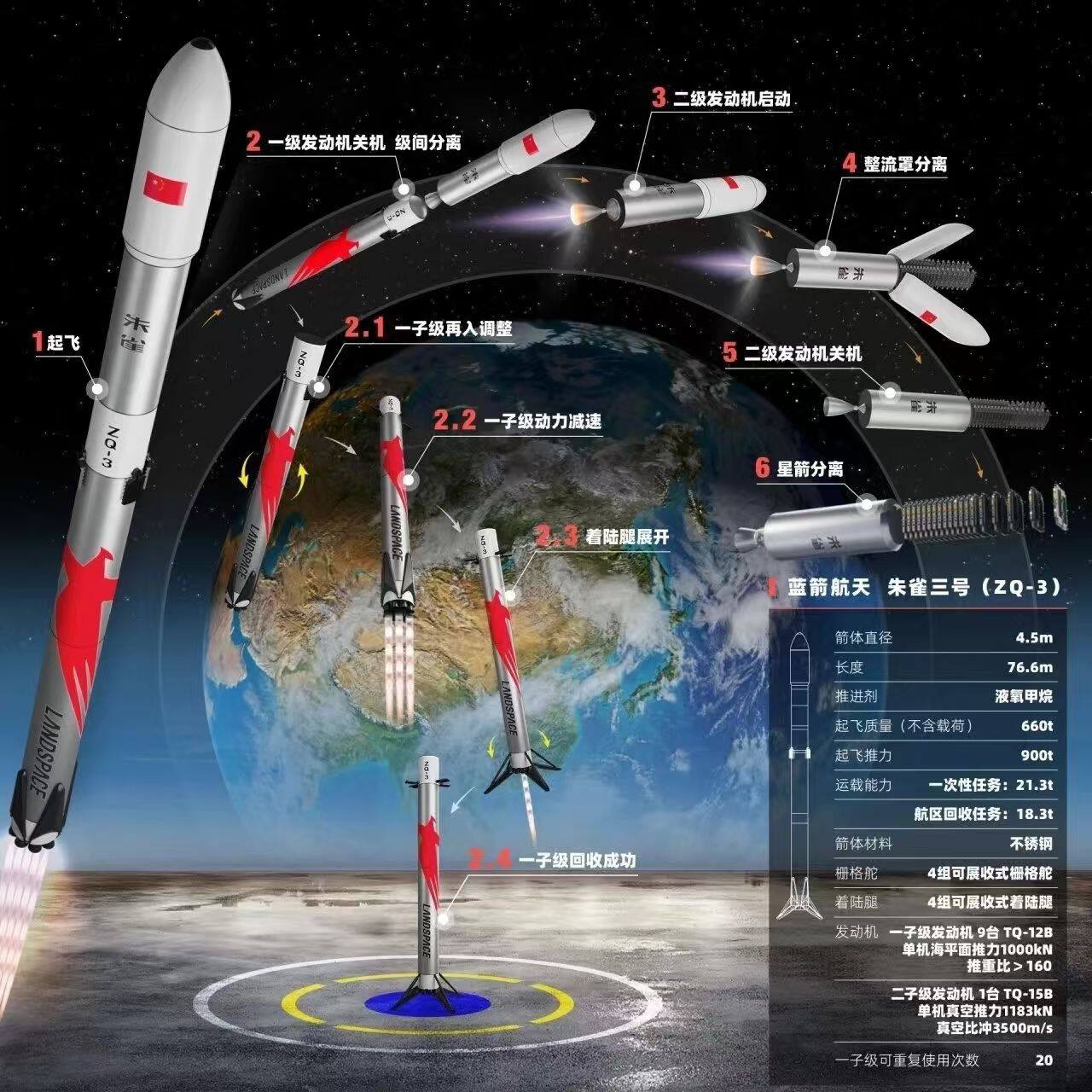
The design logic for expendable launch vehicles focuses on ensuring reliable completion of a single mission. In contrast, reusable rockets must account for cumulative damage from the same structure undergoing multiple cycles of ascent, separation, reentry, deceleration, landing, and relaunch. Each mission叠加 thermal loads, aerodynamic forces, vibration, shock, and structural stress. While no visible damage may appear, fatigue, creep, interface degradation, and local plastic strain are accumulating.
The return phase is particularly complex. A 2020 review in Engineering on reusable launch vehicle mechanisms notes that reusable vehicles must simultaneously withstand plume heating during ascent, aerodynamic heating during reentry, and thermal shock from retro-propulsion during powered landing. Thermal protection systems must not only endure high temperatures but also accommodate thermal shock, low thermal expansion, low thermal conductivity, lightweight design, and structural integrity after multiple missions. [5]
Public information on China's Zhuque-3 Y2 also notes that the development team optimized for extreme aerodynamic and thermal loads during reentry. This indicates that for reusable rockets, "environmental adaptability" has shifted from a one-time limit verification to an ongoing process requiring continuous refinement based on flight data. [6]
3. Engine: The quintessential "thermal cycle life" component
The lifespan of reusable liquid rocket engines primarily hinges on the thrust chamber. The combustion chamber's inner wall faces high-temperature exhaust gases on one side and undergoes regenerative cooling by cryogenic propellants on the other, creating a steep temperature gradient through the wall thickness. Each start-up, steady-state operation, and shutdown subjects the chamber to significant thermal-mechanical cycling.
A 202022 study published in *Aerospace* on liquid oxygen/kerosene engines highlights that evaluating thrust chamber life requires accounting for cumulative damage from fatigue, creep, and wall thinning across all ignition cycles, rather than simply checking if material strength limits are exceeded during a single ignition. [7] Similarly, Jin Ping et al. at Beihang University noted in *Journal of Astronautic Systems Engineering and Technology* that the core distinction between reusable and expendable engines lies in their life requirements, necessitating robust life assessment methods for critical components. [8]
From a materials perspective, this is a classic low-cycle thermo-mechanical fatigue problem. High-temperature gases rapidly heat the inner wall, while cooling channels force it to cool down; plastic strain from thermal gradients accumulates with each start-stop cycle. When combined with combustion pressure, vibration, and local hot spots, cracks typically initiate at the hot-side walls or geometric stress concentrators. Therefore, for reusable engines, passing a 130 s long-duration test is only part of reliability validation. More critical are whether repeated starts, cumulative operating hours, and teardown data can establish a stable life model.
IV. Thermal Protection: One successful burn doesn't guarantee reliability on the 25th attempt.
For reusable single-stage-to-orbit vehicles, the thermal protection system's role is not to achieve a specific "maximum temperature tolerance," but to convert surface heat flux into a controlled temperature field under the given reentry trajectory, thereby safeguarding internal structures and equipment. For reusable applications, additional evaluation criteria include: compaction, cracking, or debonding of the insulation layer; widening of seams; changes in surface roughness; and degradation of thermal performance after multiple reentries.
An open study published in 2025 by a team from Northwestern Polytechnical University and the China Academy of Launch Vehicle Technology found that non-smooth features on reusable launch vehicle thermal protection blankets—such as surface microstructures,铺设 gaps, and grooves—can even affect local aerodynamic and pressure measurements. This indicates that thermal protection is not merely a layer of "static insulation material"; its actual geometric state can influence the flight environment. [9]
Therefore, thermal protection validation for reusable systems must evolve from single-cycle heat resistance testing to a coupled "heat flux–temperature–structure–cycle" evaluation. This approach must not only verify whether ablation or overheating occurs at peak heat flux, but also assess whether thermal insulation performance and surface condition remain within allowable limits after multiple rapid temperature cycles, vibration, and structural deformation.
5. The validation framework for reusable rockets should shift from "one-time success" to "layered cyclic verification."
| Verify Level | Object | Typical Environment | Key Metrics | Answered question |
|---|---|---|---|---|
| Material-level | Alloys, coatings, thermal insulation materials, and composites | High temperature, thermal shock, thermal cycling, vibration | Temperature, Strain, Cracking, Residual Performance | Does the material degrade after multiple tasks? |
| Component-level | Thrust chamber wall, control surface, leg, joint | Thermal-mechanical coupling, local heat flux, cyclic loading | Deformation, Strain, Thermal Gradient, Fatigue Life | Where is the first failure location? |
| Subsystem-level | Engine, TPS, Valves, Avionics | Repeated start-stop, vibration and shock, temperature cycling | Performance drift, NDT, thermal resistance, functional status | Can it operate reliably within the specified number of tasks? |
| Arrow-level | Recycle one child | Real flight/recovery environment | Flight data, thermal response, structural response | Does the model match real-world flight performance? |
| After Recycling | Arrow body already flown | Disassembly, Non-Destructive Testing, Functional Re-verification | Defects, Performance Degradation, Remaining Useful Life | Can we fly higher at this level? |
The core of this layered validation is not to make all tests more "extreme," but to decompose the real flight environment into controllable, measurable, and repeatable load cases. Material and component-level tests quickly identify weak points; subsystem cyclic tests establish life curves; and real flight data refines the models. Only through this approach can reflight criteria evolve from "experience-based judgment" to "data-driven life management."
VI. Determining "how many more flights are possible" after recovery will become the true technological dividing line.
Industry reports on 9/24 noted that domestic returned samples remain limited, necessitating comprehensive disassembly and inspection of primary components—including tanks, welds, engines, valves, and electrical systems—while validating life models against flight test data. [4] This marks the pivotal shift for reusability technology from "demonstrating capability" to "operational readiness."
A mature reusability system does not require fully disassembling the rocket each time. Instead, it should progressively establish health monitoring and tiered maintenance protocols: which components can be cleared based on real-time data, which require non-destructive testing, and which must be replaced after reaching a specific cycle count. Shorter turnaround times rely more heavily on reliable condition sensing and life prediction.
A 202026 study on avionics for reusable launch vehicles also reflects this principle: cumulative damage from repeated vibration, shock, and thermal cycling cannot be replaced by the average system lifespan. The paper incorporates thermal and vibration fatigue into component-level damage assessments, emphasizing that the weakest link may determine the actual number of reuses for the entire system. [10]
7. Industry Watch: The Next Battle in Commercial Spaceflight May Be "Who Can Prove Safe Re-flight Fastest"
In recent years, China's commercial spaceflight competition has focused on first flights, orbital insertion, and recovery. Starting in the second half of 2026, as single-stage recovery and reusable vehicles have advanced, the technical focus is shifting from "can we recover?" to "how quickly can we determine if a recovered vehicle is ready for another flight?"
This directly impacts the value of ground testing. For expendable rockets, ground tests are primarily used for design finalization and pre-flight validation; for reusable rockets, they also support building life databases, validating flight data, assessing post-recovery conditions, and establishing criteria for reflight. High temperatures, rapid thermal cycling, thermo-mechanical coupling, combined vibration loads, and multi-channel synchronized measurements will increasingly align with real-world engineering requirements.
The cost advantage of reusable rockets ultimately depends on two factors: how many times a component can reliably operate, and how quickly it can be cleared for flight after each mission. In other words, the era of reusability doesn't require "more heat-resistant" rockets; it demands a verification system that answers: "After this mission, how much safe life remains?"
Reference Materials
- [1] China National Space Administration. Shenzhou No. 1 Remote-1 Launch Vehicle Successfully Launched. 2026-09-01.
- [2] Beijing Municipal People's Government / Beijing Economic-Technological Development Area Administration. "Asteria 1" achieves successful maiden flight, aiming to build a low-cost "space train". 2026-09-04.
- [3] Beijing Municipal Science and Technology Commission, Zhongguancun Technology Park Management Committee. Galaxy Power reusable rocket main engine enters reliability verification test phase. 2026-09-11.
- [4] The Economic Observer. Reusability: A Major Test for Rockets. 2026-09-24.
- [5] Recent Advances in Aerospace Mechanisms for Reusable Launch Vehicles: A Review. Engineering, 2026. DOI: 10.1016/j.eng.2026.02.030.
- [6] National Center for Innovation in Science and Technology. Captured! Zhuque-3 Y2 launch vehicle achieves China's first-ever "homecoming" using land-based landing legs. 2026-08-19.
- [7] Yang et al. Life Analysis of Reusable Liquid Rocket Engine Thrust Chamber. Aerospace, 2022, 9(12): 788. DOI: 10.3390/aerospace9120788.
- 8 Jin Ping, Lv Junjie, Qi Yaqun, Cai Guobiao. Discussion on the life problem of reusable liquid rocket engine. Aerospace System Engineering, 2023, 7(4): 51-59.
- [9] Chen H., Yang Y., Zhang M. Effect of Thermal Protection System on Aerodynamics and Pressure of Reusable Launch Vehicle. Space: Science & Technology, 2025, 5: 0260. DOI: 10.34133/space.0260.
- [10] Damage-Quantified Reusability Assessment for Reusable Launch Vehicle Avionics: A Framework Integrating Physics-of-Failure Modeling with Multi-Criteria Decision Making. Aerospace, 2026, 13(9): 803.
- [11] Hu, Y., Du, T., Li, M., et al. Study on Ground-Space Correlation of Thermal Environment Wind Tunnel Tests for Reusable Launch Vehicles. Journal of Astronautics, 2025. DOI: 10.3873/j.issn.1000-1328.2025.07.003.
- [12] Laureti M., Karl S. Aerothermal databases and load predictions for retropropulsion-assisted launch vehicles (RETALT). CEAS Space Journal, 2022, 14: 501-515.