
Product Center
Heating equipment series tailored for research scenarios
KHL-S2000 Laser Face Warmer
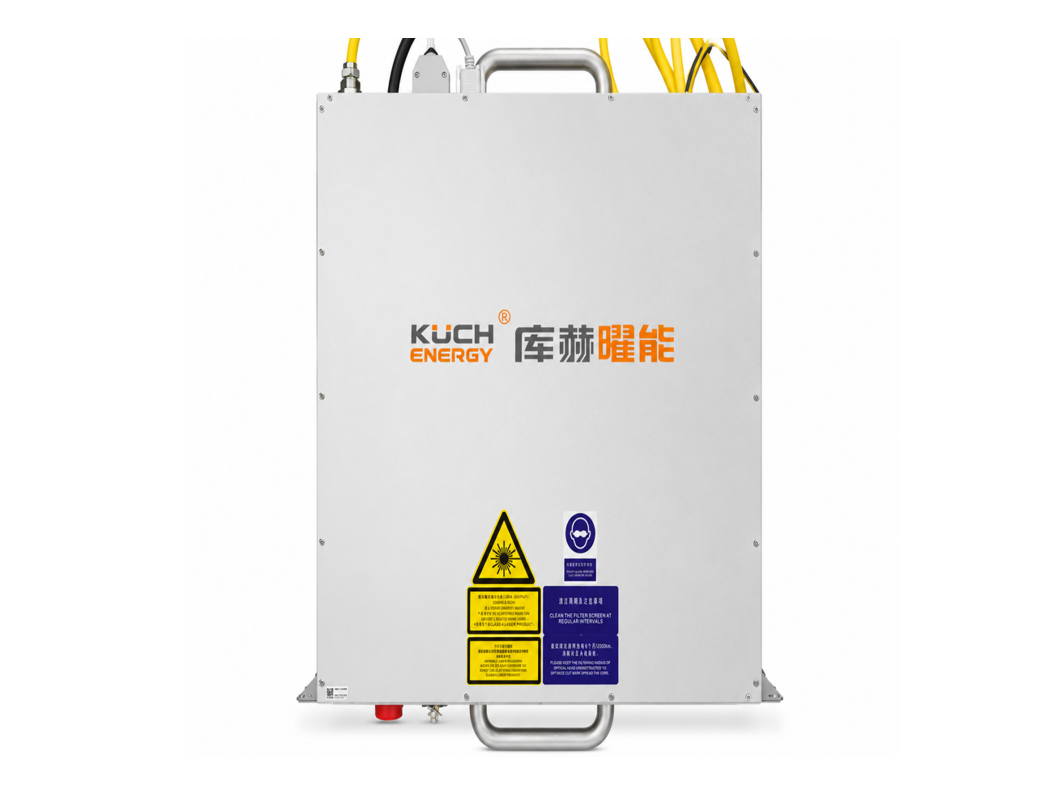
Product Overview
The KHL-S2000 Laser Surface Heater is a non-contact laser heat source designed for material heat treatment, thermal loading tests, additive manufacturing auxiliary heating, and research-based thermal field simulation. The system uses approximately 2000 W near-infrared laser as its core heat source, combined with collimation, beam expansion, and homogenization optics to generate square or rectangular heated spots on the sample surface. This enables large-area, controlled, and rapid heating of specific regions. Unlike traditional furnaces that heat the entire volume of air, insulation, and fixtures, the laser source concentrates energy directly on the target workpiece, offering fast thermal response, high power density, precise localized heating, and easy integration with other test equipment. Key performance metrics include heating areas from 80×80 mm to 300×300 mm, maximum temperatures up to 1800°C (with some conditions reaching 2000°C), and heating rates of 20~200°C/s. Actual performance depends on sample material, thickness, absorptivity, thermal boundary conditions, and temperature measurement methods.
Product Positioning
Non-contact Laser Heat Source Device
Approximately 2000 W near-infrared laser, homogenized and shaped into a square or rectangular planar heat spot, enables localized, large-area, controllable, and rapid heating.
High-temperature peak capability
Achieves heating at the 1800°C level under conditions of high absorption rate, small area, and high power density; reaches up to the 2000°C level in specific scenarios.
Product Type
How it works
The laser emits near-infrared light, which is transmitted and collimated before entering beam expansion and homogenization optics. These optics reshape the concentrated energy distribution into square, rectangular, or near-flat-top spots to ensure uniform energy across the target area. The conditioned laser irradiates the sample surface, where absorbed energy converts to heat for rapid, non-contact heating. An infrared pyrometer monitors the sample temperature in real time, while a control system adjusts laser output based on setpoint temperature, ramp rate, and dwell time to enable programmed heating, constant-temperature control, and over-temperature protection.
With total power fixed at approximately 2000 W, a larger effective heating area results in lower power density per unit area: 80×80 mm is better suited for achieving higher temperatures and faster heating rates, while 300×300 mm is more appropriate for uniform preheating of large areas or constructing mid-to-high temperature thermal fields. Laser output power does not equal the actual heat power absorbed by the sample; actual heat input also depends on beam homogenization efficiency, reflection losses, material absorptivity, surface conditions, and environmental heat dissipation.
Important Notice:1800°C and 2000°C represent the system's peak performance under specific conditions involving high-absorption materials, small surface areas, high power density, and optimized thermal boundaries. ±1°C denotes typical steady-state temperature fluctuation, while ±2% uniformity is defined by the effective area, target temperature, and measurement method. Final project specifications are subject to agreed test conditions and acceptance criteria.
Core Advantages
A ~2000 W near-infrared laser, homogenized and shaped to form a flat-top planar heat spot, enables non-contact high-temperature heating with rapid thermal response. Stable continuous operation is achieved via infrared closed-loop control and water cooling.
Large-area planar laser thermal field
Through beam shaping and projection design, create a square or rectangular effective heating area ranging from 80×80 mm to 300×300 mm, balancing high local power density with broad coverage.
Non-contact high-temperature heating
The laser has no mechanical contact with the specimen, reducing heat conduction from fixtures, contact contamination, and additional mechanical interference. This facilitates integration with tensile, fatigue, vibration, and thermal imaging test systems.
Fast thermal response
Laser output features rapid power adjustment for programmed temperature rise, quick warm-up, short-duration high-temperature exposure, pre-heating prior to thermal shock, and dynamic thermal loading.
Beam uniformization
Improves traditional Gaussian beam hot spots through beam homogenization, flat-top shaping, and projection optics to enhance energy uniformity across the target area.
Closed-loop control
Enables closed-loop temperature control, heating rate regulation, holding, and alarm interlock when paired with an infrared thermometer; adding a thermal imager further evaluates the uniformity of the temperature field across large areas.
Water-cooling stable operation
Water-cooled thermal management maintains stable temperature rise conditions for the laser, optical components, and housing, making it suitable for continuous or high-duty-cycle operation to enhance operational reliability.
Key Technical Specifications
| Product Model | KHL-S2000 |
| Heating Method | Laser surface heating / non-contact localized thermal loading |
| Rated Laser Power | Approx. 2000 W |
| Laser wavelength | Near-infrared 1 μm band; standard configuration available at 1064 nm or approximately 1080 nm. |
| Spotlight Mode | Square/rectangular flat-top or near-flat-top beam |
| Effective heating area | 80×80 mm to 300×300 mm, customizable |
| System heating start point | Room temperature |
| Typical Closed-Loop Temperature Zone | Approx. 200–1800°C* |
| Maximum Temperature Rating | Typical maximum: 1800°C; specific conditions can reach up to 2000°C* |
| Typical heating rate | Approx. 20–200°C/s, adjustable* |
| Typical steady-state temperature fluctuation | Approx. ±1°C* |
| Typical Effective Zone Temperature Uniformity | Approx. ≤±2%* |
| Temperature Measurement Method | Infrared thermometer; thermal imager or thermocouple available |
| Control Mode | PID closed-loop, programmed temperature rise, constant temperature, alarm interlock |
| Cooling Method | liquid cooling |
| Work Mode | Continuous or process-based output adjustment |
| Installation Method | Fixed Workbench / Integrated Fixture / Non-Standard Online |
| Application Environment | Standard for atmospheric pressure; special atmosphere/cavity applications adapted per project. |
| Custom Content | Spot size, working distance, bracket, temperature measurement method, control system, and online solution |
Typical Applications
Localized heat treatment of materials
Ideal for rapid preheating, annealing, curing, and heat treatment of thin sheets, films, composites, and localized areas.
Additive Manufacturing Auxiliary Heating
Substrate preheating, interlayer temperature control, and residual stress management for metal 3D printing, deposition, or additive manufacturing processes.
Aerospace and High-Temperature Material Testing
Localized thermal loading and response studies for composite materials, thermal protection systems, and high-temperature structural components
Electronics and Semiconductor Processing
Enables localized heating and thermal process validation for substrates, components, and packaging materials.
Research Thermal Field Platform
Suitable for high-temperature experiments, dynamic thermal fields, thermal fatigue, and thermal cycling research.
Industrial Online Heating
Integrates into non-standard automation equipment for pre-process treatment, online preheating, and process intensification.
System Configuration and Control Mode
| Configuration Type | Typical Components | Use Cases |
|---|---|---|
| Basic Power Regulation | Focusing heating head, power controller, cooling assembly, mounting bracket | Process exploration, rapid heating, and experiments with low constant-temperature precision requirements. |
| Closed-loop temperature control | Basic Configuration + Thermocouple or Infrared Temperature Sensor + PID Controller | Target temperature control, heat preservation, over-temperature protection, and repeatability testing |
| Automated Integration Suite | Closed-loop system + 3-axis platform/robotic arm + data acquisition and host computer | Multi-point switching, scan heating, test process linkage, and automatic recording |
Selection Details & Customization Services
Product power, focal length, and control method should be determined jointly based on the sample and test objectives. Before selection, clarify the following information to ensure the spot size, heating rate, and temperature stability meet actual operating conditions:
- Sample material, dimensions, thickness, weight, and surface condition
- Heated zone dimensions, target temperature, allowable ramp-up time, and hold time
- Temperature fluctuation, repeatability, measurement accuracy, and whether temperature curve logging is required
- Fixed-point scanning, multi-position switching, or mobile scanning
- Installation space, working distance, fixture interference, and cooling and safety protection conditions
Available Customizations
- Different power outputs, focal lengths, and target spot sizes
- Fixed, adjustable-angle, or three-axis movable mounting structures
- Thermocouple, Infrared Thermometry, and Dual-Point Verification Solution
- PID closed-loop temperature control, programmable temperature ramping, hold function, and over-temperature protection
- Temperature, Power, and Alarm Data Collection and Export
- Integrate with test machines, robotic arms, fixtures, and automation platforms
Usage and Safety Instructions
- ⚠Strong visible and infrared radiation is emitted during operation. Do not look directly at the light source or focus area. Use appropriate eye and radiation protection equipment.
- ⚠The sample, heating head tip, and surrounding structures may be hot. Install heat guards and allow adequate cooldown time after power-off.
- ⚠Keep the air-cooled channel clear. Do not operate continuously if cooling is abnormal, the reflector surface is contaminated, or electrical connections are loose.
- ⚠Infrared temperature readings are affected by emissivity, angle, and spot size coverage. For highly reflective metals, combine with thermocouples or use a calibrated measurement solution.
- ⚠For adhesives, coatings, and materials that may emit volatiles, evaluate ventilation, smoke extraction, and fire safety conditions.
Product Value
A 2000 W near-infrared laser is collimated, expanded, and homogenized to form a flat-top planar heat spot. Combined with infrared temperature measurement using PID closed-loop control and water-cooled thermal management, it is suitable for material heat treatment, thermal loading tests, additive manufacturing auxiliary heating, and scientific thermal field simulation.