
Product Center
Heating equipment series tailored for research scenarios
KHL-L3000 Laser Line Heater
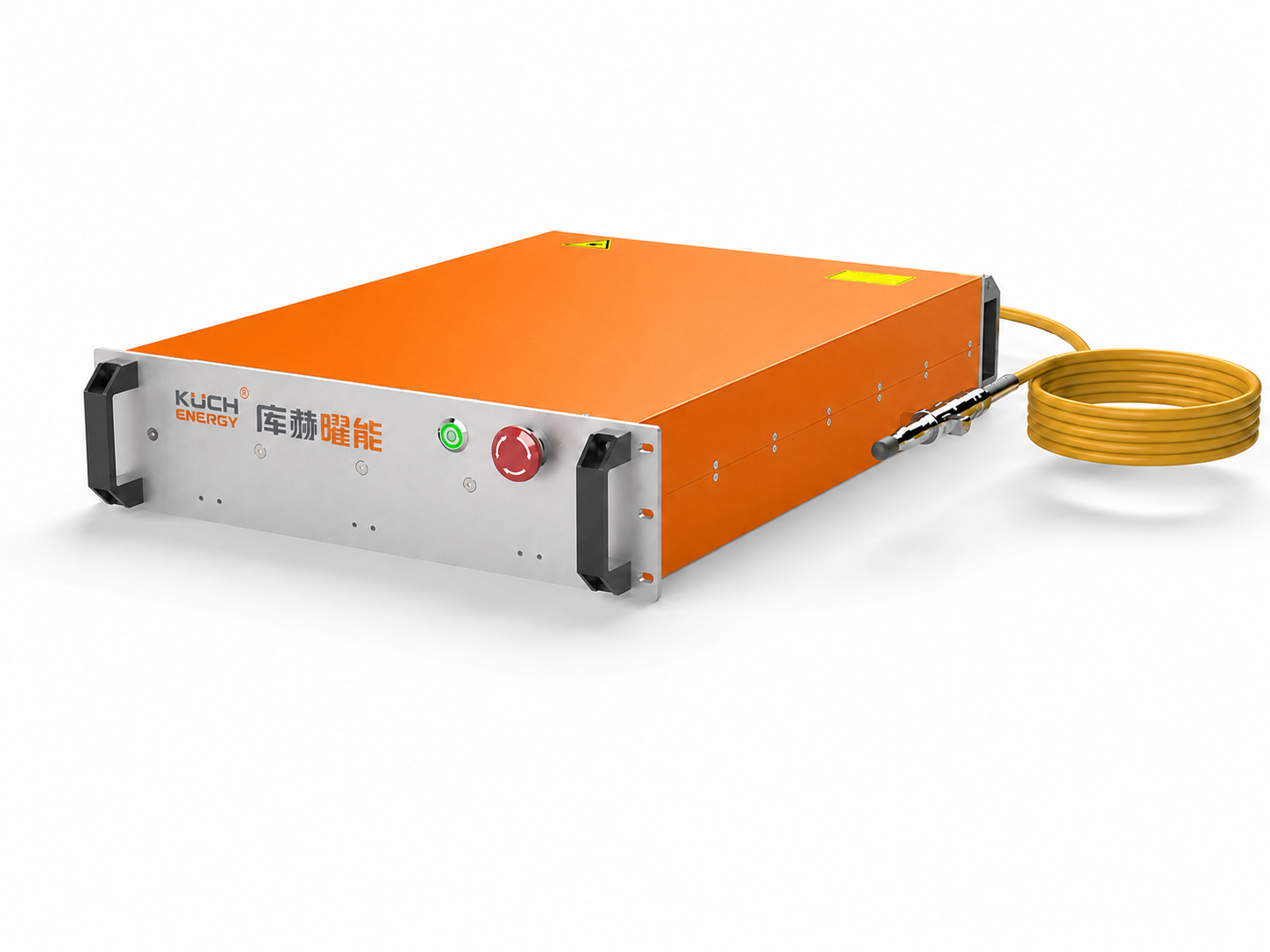
Product Overview
The KHL-L3000 laser line heater is a non-contact laser heat source designed for rapid thermal loading in narrow, elongated zones, localized material heat treatment, thermo-mechanical testing, and integration into automated processes. The system supports configurable 1000 W, 2000 W, or 3000 W continuous-wave near-infrared lasers. Through collimation, beam expansion, and homogenization, it produces a uniform linear or ribbon-shaped spot on the specimen surface with a length significantly greater than its width, enabling fast and precise thermal input to targeted line areas. Unlike traditional furnace heating that affects the entire volume, this system directs laser energy directly to the target zone, minimizing unnecessary heating of fixtures, non-target specimen areas, and surrounding air. It is ideal for applications involving one-dimensional features such as gauge sections of high-temperature alloys, welds, strip edges, and composite layup paths. Integrated with infrared thermometry or thermal imaging feedback, the system supports programmed heating, constant temperature control, thermal cycling, and dynamic power adjustment.
Product Positioning
Narrow, elongated non-contact laser heat source
1~3 kW continuous laser is homogenized and shaped into a uniform line or strip spot for fast, precise thermal input to the designated linear zone.
Three-tier thermal field uniformity control
Optical homogenization, end compensation, and temperature feedback correction enhance energy uniformity along the length of the long heating line.
Product Type
How it works
The laser outputs continuous near-infrared radiation in the 1 μm band. The beam is delivered via fiber to a collimation and beam-shaping assembly, where expansion, homogenization, cylindrical optics, or specialized line-beam shaping elements convert the original circular/Gaussian beam into a narrow rectangular, linear, or wide strip flat-top profile. This ensures uniform energy distribution along the length of the target area. Upon absorption by the sample, light energy is converted to heat. An infrared thermometer, thermal imager, or thermocouple feeds temperature data back to the control system. A PID controller dynamically adjusts the laser output based on the setpoint to achieve rapid heating, constant temperature, programmed temperature control, and over-temperature protection.
The key to a wire heating system lies in the combination of power, wire length, bandwidth, and working distance. At the same 3000 W output, shorter wires with narrower bands (50 mm) achieve higher average power density, making them ideal for rapid heating and high-temperature loading. Longer wires or wider bands (300 mm) result in lower average power density, better suited for uniform preheating over larger areas. When selecting equipment, first define the effective heating zone, then match it with the appropriate laser power.
Important Notice:300 to 2000°C is the typical infrared closed-loop temperature range; 300°C represents the lower boundary for some high-temperature infrared thermometers to enter stable closed-loop operation. 2000°C denotes the peak performance under specific conditions involving small areas and high absorptivity. Heating rate, temperature control stability, and uniformity depend on material properties, thickness, surface absorptivity, spot size, working distance, fixture heat dissipation, and measurement method. Final acceptance shall be based on the agreed test conditions.
Core Advantages
Builds uniform line or strip-shaped spots with continuous 1–3 kW lasers. Enables non-contact, precise thermal loading and fast thermal response. Supports automated integration and water-cooled continuous operation.
1~3 kW power platform
Supports 1000 W, 2000 W, and 3000 W power levels; matched to wire length, bandwidth, target temperature, and material absorptivity.
Uniform linear/striped light spot
Enhance energy uniformity along the length via beam homogenization and top-hat shaping, reducing central hot spots and low-temperature regions at the ends.
50~300 mm custom wire length
Line length can be designed based on specimen gauge length, strip width, or process trajectory. For ultra-long applications, scanning, multi-beam, or multi-module combinations are supported.
Fast thermal response
Laser output is rapidly adjustable for quick heating, localized preheating, thermal cycling, and dynamic temperature control.
Contactless precise hot reload
Does not apply additional mechanical loads to specimens and is compatible with extensometers, thermal imaging cameras, displacement measurement systems, and mechanical loading setups.
Water-cooled continuous operation
Laser and critical optical components feature water-cooled thermal management, designed for high-power, high-duty-cycle operation.
Automated Integration
Integrates with linear stages, robots, test machines, PLCs, and host computers to enable coordinated control of position, power, and temperature.
Key Technical Specifications
| Product Model | KHL-L3000 |
| Heating Method | Continuous linear/strip non-contact heating |
| Laser Power | 1000 / 2000 / 3000 W, optional |
| Laser wavelength | Near-infrared 1 μm band; configurable in 1064 nm or approximately 1080 nm steps |
| Laser Operating Mode | Continuous/Power Modulation |
| Spotlight Mode | Uniform linear, narrow rectangular, or near-flat-top strip-shaped beam spot |
| Effective heating strip width | Configured by process; narrow wires from millimeters to 20 mm, wide strips customizable above 20 mm |
| Effective Wire Length | Approx. 50–300 mm, customizable |
| System heating start point | Room temperature |
| Typical Infrared Closed-Loop Temperature Zone | Approx. 300–2000°C* |
| Maximum Temperature Rating | Up to 2000°C in specific small-area, high-absorption scenarios* |
| Typical heating rate | Approximately 15–120°C/s* |
| Typical steady-state temperature fluctuation | Approx. ±1°C* |
| Typical Effective Zone Temperature Uniformity | Approx. ≤±2%* |
| Temperature Measurement Method | Infrared Spot/Thermal Imager; Optional Thermocouple-Assisted Calibration |
| Temperature Control | PID closed-loop control, temperature ramping, constant temperature, and alarm interlock |
| Cooling Method | liquid cooling |
| Power Requirements | 3000 W-class systems typically use three-phase AC 380 V power. |
| Communication Interface | Configure RS232, Ethernet, I/O, and RS485 by item. |
| Installation Method | Fixed brackets, slides, robots, or test machine integration |
| Custom Content | Power, Cable Length, Bandwidth, Operating Distance, Uniformity, Temperature Measurement and Control |
Typical Applications
Local heat treatment of metal
For preheating, tempering, softening, local annealing, and temperature field control of plates, strips, welds, and other narrow areas.
Thermo-mechanical coupling test
Integrates with tensile, fatigue, and creep testing equipment to apply linear high-temperature thermal loading to the gauge section of specimens.
Composite Material Machining
Tape laying, winding, local preheating, and joining processes for CFRP and thermoplastic composites
Additive Manufacturing Auxiliary Heating
Linear preheating and thermal stress regulation for substrate, deposition path, and build area
Semiconductor & Electronic Materials
Rapid localized thermal processing for ribbons, films, and functional materials
Automated heating scan
Integrate with robots or motion platforms for continuous trajectory scanning to enable moving line heat sources.
Scientific High-Temperature Testing
Suitable for studying dynamic temperature fields, thermal cycling, thermal fatigue, and high-temperature material behavior.
System Configuration and Control Mode
| Configuration Type | Typical Components | Use Cases |
|---|---|---|
| Basic Power Regulation | Focusing heating head, power controller, cooling assembly, mounting bracket | Process exploration, rapid heating, and experiments with low constant-temperature precision requirements. |
| Closed-loop temperature control | Basic Configuration + Thermocouple or Infrared Temperature Sensor + PID Controller | Target temperature control, heat preservation, over-temperature protection, and repeatability testing |
| Automated Integration Suite | Closed-loop system + 3-axis platform/robotic arm + data acquisition and host computer | Multi-point switching, scan heating, test process linkage, and automatic recording |
Selection Details & Customization Services
Product power, focal length, and control method should be determined jointly based on the sample and test objectives. Before selection, clarify the following information to ensure the spot size, heating rate, and temperature stability meet actual operating conditions:
- Sample material, dimensions, thickness, weight, and surface condition
- Heated zone dimensions, target temperature, allowable ramp-up time, and hold time
- Temperature fluctuation, repeatability, measurement accuracy, and whether temperature curve logging is required
- Fixed-point scanning, multi-position switching, or mobile scanning
- Installation space, working distance, fixture interference, and cooling and safety protection conditions
Available Customizations
- Different power outputs, focal lengths, and target spot sizes
- Fixed, adjustable-angle, or three-axis movable mounting structures
- Thermocouple, Infrared Thermometry, and Dual-Point Verification Solution
- PID closed-loop temperature control, programmable temperature ramping, hold function, and over-temperature protection
- Temperature, Power, and Alarm Data Collection and Export
- Integrate with test machines, robotic arms, fixtures, and automation platforms
Usage and Safety Instructions
- ⚠Strong visible and infrared radiation is emitted during operation. Do not look directly at the light source or focus area. Use appropriate eye and radiation protection equipment.
- ⚠The sample, heating head tip, and surrounding structures may be hot. Install heat guards and allow adequate cooldown time after power-off.
- ⚠Keep the air-cooled channel clear. Do not operate continuously if cooling is abnormal, the reflector surface is contaminated, or electrical connections are loose.
- ⚠Infrared temperature readings are affected by emissivity, angle, and spot size coverage. For highly reflective metals, combine with thermocouples or use a calibrated measurement solution.
- ⚠For adhesives, coatings, and materials that may emit volatiles, evaluate ventilation, smoke extraction, and fire safety conditions.
Product Value
1–3 kW continuous-wave near-infrared laser, collimated, expanded, and homogenized into a uniform line or strip beam. With infrared closed-loop control and water-cooled thermal management, it enables rapid thermal loading of narrow areas, localized heat treatment, thermo-mechanical coupling testing, and integration into automated processes.